Building Multi-Agent AI Systems for Complex Business Operations

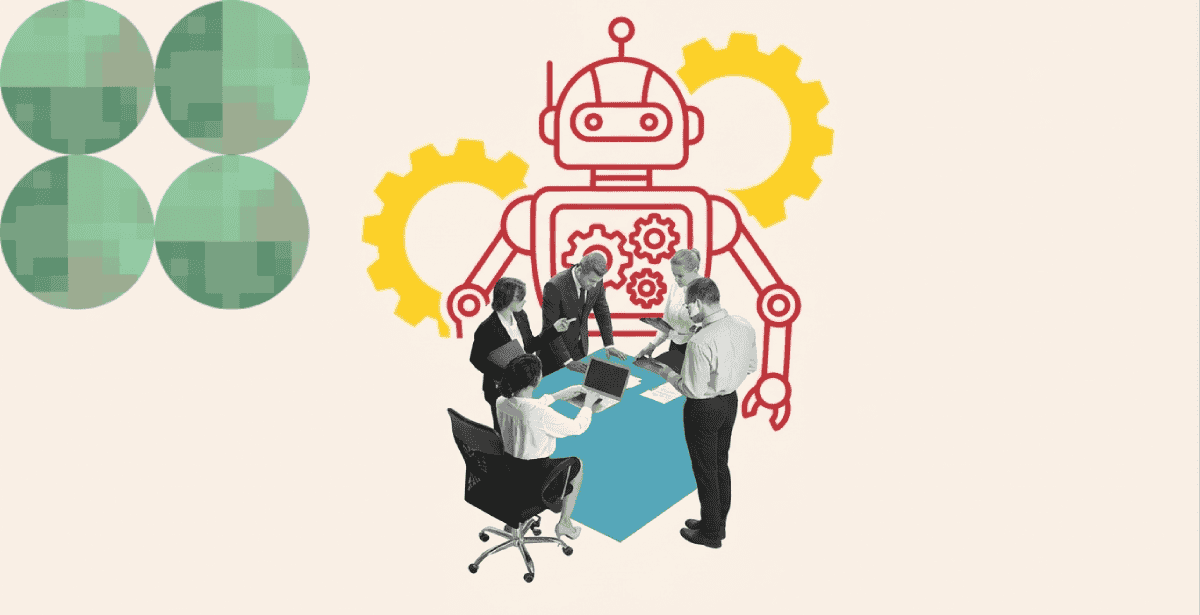
A single chatbot can answer a question well. However, it cannot close a loan, reconcile a ledger, and flag fraud inside the same workflow.
Multi-agent AI systems exist for exactly that gap. They split a complex business operation into specialized tasks. Then they coordinate the results into one coherent outcome.
Multi-Agent Framework: The Foundation Every System Needs
A multi-agent framework defines how individual agents communicate with each other. It governs how they share state and hand off tasks between themselves.
Without that structure, agents simply collide. They duplicate work, overwrite each other’s results, or stall waiting on a response that never arrives.
Most frameworks handle three core jobs. Routing sends each task to the right agent. Context-passing keeps intent intact across every handoff. Conflict resolution settles disagreements between outputs.
Skipping any of these three jobs creates failures. Those failures tend to surface weeks later, usually during a real customer interaction rather than a controlled test run.
Routing logic deserves particular attention early in the design process. A poorly specified router sends tasks to agents that lack the context or tools to handle them well.
Context handoff is just as easy to underestimate. An agent that loses the user’s original intent mid-handoff produces an answer that is technically correct but practically useless.
💡 Framework design is only one part of building reliable autonomous workflows; agents also need clear boundaries and measurable responsibilities. An AI agent development company can help define each agent’s scope, available tools, decision-making authority, and escalation conditions before deployment. This prevents agents from taking conflicting actions or operating beyond their intended roles as workflows become more complex.
Choosing a framework before the workflow is mapped out tends to force awkward compromises later. Mapping the workflow first keeps the framework choice grounded in what the business actually needs.
Evaluating a framework candidate should include a few concrete questions. How does it handle a crashed agent mid-task? Can a human step in and override a decision cleanly? Those answers matter more than any marketing comparison chart.
Teams that skip this evaluation step often discover the gaps only once real production traffic exposes them. Retrofitting recovery logic afterward costs considerably more than designing it in from the start.
Vendor lock-in is worth weighing too, since some frameworks tie workflows tightly to one specific model provider. Portability matters once a system runs agents on more than one underlying model. That mix happens sooner than most teams initially expect.
Gartner predicts that by 2027, one-third of agentic AI implementations will combine agents with different skills. That shift makes framework choice an urgent decision now, not a later one.
Collaborative AI Agents: Getting Specialists to Work Together
Collaborative AI agents each own a narrow slice of a larger business process. One extracts data, another validates it, and a third takes action on the result.
That specialization is the entire point of the design. A narrowly scoped agent is easier to test, monitor, and eventually replace than one generalist model trying to do everything.
Collaboration breaks down when agents disagree about shared data. Establishing a single source of truth for each data type prevents that kind of quiet drift over time.
Versioning matters here too. Agents built or updated at different times can silently assume different schemas. That mismatch creates integration bugs that are genuinely hard to trace later.
A shared contract between agents, defined once and enforced everywhere, avoids most of that bug class. It costs a little discipline upfront but saves far more debugging time later.
Case Study: Coordinated AI Across 30,000+ Connected Properties
iApartments needed predictive models working in concert across a fast-growing, distributed portfolio. No single model could realistically cover every building’s unique equipment mix.
DPL built a time-series anomaly detection system spanning more than 30,000 apartments and 200,000-plus connected IoT devices. Specialized models handled HVAC, access control, and utility monitoring separately, all feeding one shared alerting layer.
The results show what coordinated AI components deliver at genuine operational scale. Resident satisfaction rose 28 percent, and mean time to resolution dropped 60 percent across the portfolio.
That kind of result depends on every specialized component staying healthy on its own. A single failing model can quietly degrade the system’s overall output. Nobody notices right away when that happens.
Catching that kind of silent degradation requires dedicated monitoring built specifically for multi-model systems. A single dashboard built for one model in isolation will not catch it.
Alerting thresholds also need to account for normal disagreement between specialized models. Not every mismatch signals a real failure worth paging an engineer about at midnight.
Building that threshold calibration takes real domain knowledge, not just statistical defaults borrowed from a vendor’s documentation. A threshold tuned for one property type rarely transfers cleanly to a very different one.
You can read the whole iApartments case study for further details.
Agent Swarm Development: When More Agents Beats One Big Model
Agent swarm development uses many narrow, inexpensive agents instead of one large model trying to handle everything alone. The swarm divides labor the way a real team naturally would.
This pattern works best when a task decomposes cleanly into independent subtasks. Document processing, multi-step approvals, and research synthesis all fit that general shape well.
Cost discipline matters inside a swarm just as much as raw capability does. Routing simple subtasks to smaller, cheaper models keeps the economics sustainable as volume grows over time.
Swarm sizing is its own design decision, separate from task decomposition itself. Adding more agents than a workflow genuinely needs just adds coordination cost without adding real value.
A useful rule of thumb: start with the fewest agents that can still cover every distinct subtask cleanly. Scale the swarm up only once real usage data justifies the added complexity.
The agentic AI market is projected to grow to USD 19.33 billion in 2026, reaching USD 205.88 billion by 2033. That growth reflects genuine enterprise demand for exactly this swarm-style pattern.
Swarm design still needs a supervisor layer, even when no single agent clearly dominates the workflow. Without one, a failure inside a single subtask can quietly cascade through the rest of the system.
That cascading failure mode is precisely why unsupervised swarms tend to fail badly. The failures are often hard to debug well after the fact, once the damage has already spread.
A supervisor does not need to micromanage every subtask to be effective. It mainly needs visibility into which agents are healthy and which ones are quietly falling behind schedule.
Building that visibility in from the start costs far less than bolting it on later. Retrofitting it onto a swarm already struggling in production is a much harder job.
That visibility also helps during planned changes, not just outages. Swapping one agent’s underlying model becomes far safer once its normal behavior is already well understood.
💡 Before expanding an autonomous workflow, establish how you’ll measure whether each agent contributes enough value to justify its complexity. An AI agent development company can help define performance benchmarks for task completion, accuracy, latency, coordination overhead, and cost per workflow. Tracking these metrics makes it easier to identify underperforming agents, optimize the swarm, and scale only when additional agents deliver measurable improvements.
Distributed AI Agents: Scaling Across Systems and Regions
Distributed AI agents run across separate systems, regions, or cloud environments rather than inside one process. That distribution adds real resilience, and real complexity, in roughly equal measure.
Network latency between distributed agents can quietly erode the speed advantage multi-agent systems are meant to deliver. Measuring end-to-end latency, not just per-agent latency, catches this problem early.
Failure isolation improves with distribution. One region’s outage no longer has to take down an entire coordinated system, which matters considerably at real scale.
That resilience comes with real operational overhead attached to it. Someone has to own the deployment pipeline across every region the system now touches.
Security also changes shape once agents become distributed. Each agent-to-agent connection becomes a potential attack surface that deserves deliberate, explicit protection from day one.
Encryption in transit between agents should be a default, not an afterthought added once a security review flags its absence. Retrofitting it later touches every integration point at once.
💡 Distributed AI systems are only as reliable as the connections that link them to existing business infrastructure. AI integration services should account for API compatibility, authentication, data exchange formats, network reliability, and access controls across every connected system. Mapping these dependencies before deployment helps prevent integration bottlenecks and security gaps as agents scale across environments.
Building Multi-Agent AI Systems That Deliver Real Business Value
Multi-agent AI systems earn their added complexity only when coordination overhead stays smaller than the problem being solved. That tradeoff deserves honest evaluation before the first agent gets built.
Start narrow wherever possible. A two-agent pilot that proves out routing and handoff logic teaches more than a ten-agent system designed entirely on paper.
Measuring success matters just as much as the initial design choices made upfront. Track handoff accuracy and resolution time from day one, well before something visibly breaks downstream for a real customer.
Documenting what each agent owns, and what it explicitly does not own, prevents scope confusion later. That confusion tends to creep in quietly, as a system grows well past its original design over many months.
DPL’s AI engineering practice has built coordinated AI systems that address the coordination problems teams encounter. If you’d like us to replicate our successes, let us know how we can help via the form below.