
How to Make Digital Transformation AI the Engine of Your Modernization Strategy

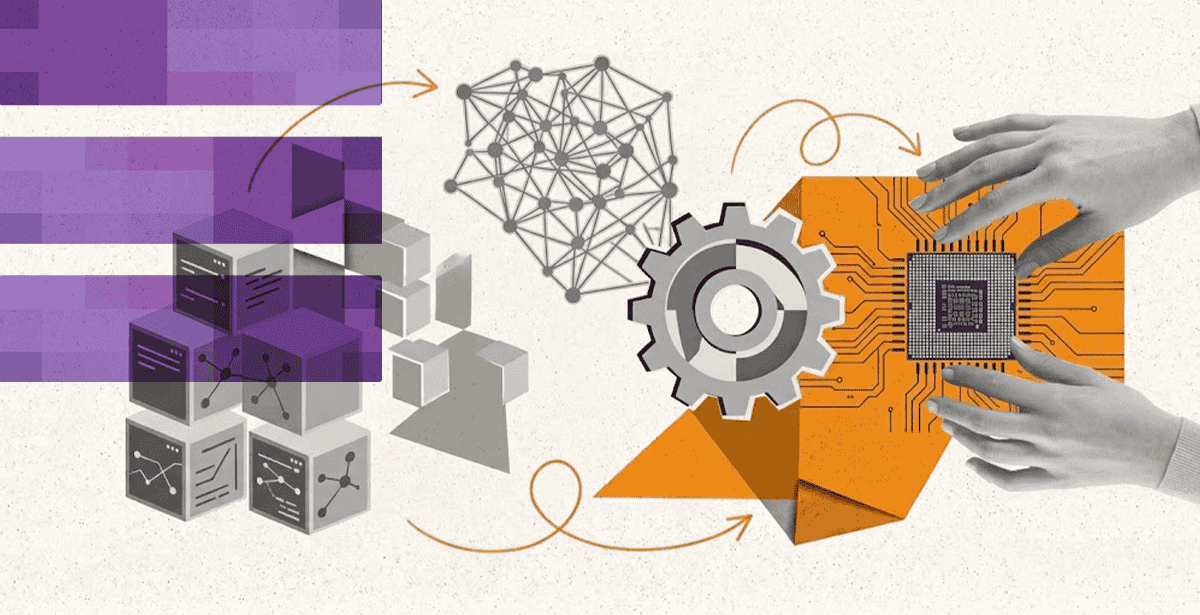
Most digital transformation programs still treat AI as a bolt-on feature. That’s backwards. Real digital transformation AI means building the entire modernization plan around what AI can now do.
This isn’t about chasing hype. It’s about recognizing that AI has become infrastructure, not an add-on. This guide walks through what that shift actually looks like in practice. Every example here comes from a deployment that has already delivered measurable results.
Why Digital Transformation AI Keeps Failing Without the Right Strategy
Most failed transformation programs share a pattern. Leadership approves a modernization budget. New tools get purchased. Old processes stay almost entirely intact underneath the new interface.
That pattern explains why so many digital transformation efforts stall after the pilot phase. Buying software isn’t the same as changing how decisions get made. Without AI actually doing analytical or decision-support work, the “transformation” is often just a fresh coat of paint.
Real modernization requires rethinking which decisions a human still needs to make. That’s an uncomfortable question for a lot of organizations. It’s also the question that separates programs that deliver from programs that quietly stall out after year one.
DPL’s digital transformation engagements start every engagement with exactly that question, before any tooling conversation begins.
Culture is usually the harder half of that conversation, harder than any technology choice. An organization built around manual review and hierarchical sign-off resists AI-driven decisions instinctively. That happens regardless of how accurate the model actually turns out to be.
Leadership has to model the new behavior first, not just approve it in a slide deck. When executives keep asking a human to double-check every AI-flagged decision, staff notice fast. They learn the tool isn’t actually trusted yet.
AI-Driven Digital Transformation: Where It Beats the Old Playbook
AI-driven digital transformation differs from the old playbook in an essential way. It doesn’t just digitize a process; it changes who, or what, makes the decision at the center of that process.
Traditional modernization replaced paper forms with digital forms. The underlying workflow rarely changed. A human still reviewed every case in the same order, at the same pace, with the same blind spots.
AI-driven approaches change the workflow itself. A model can triage, prioritize, and flag anomalies before a human ever looks at a case. That’s a structural shift, not a cosmetic one.
Recent industry data backs up how fast this shift is happening. McKinsey’s State of AI research found that 44% of organizations now report AI scaling enterprise-wide. That’s up sharply from the year before.
Individual productivity gains are already substantial too, with 80% of respondents reporting real personal gains from AI tools.
That gap between adoption and financial return is worth sitting with. Plenty of organizations report AI in daily use somewhere in the business. Far fewer can point to a specific line on the income statement it moved.
Building an AI Digital Strategy Before You Buy Any Tools
An AI digital strategy has to start before procurement, not after. Too many organizations buy a platform first and then search for a use case that justifies the purchase. Digital transformation AI succeeds only when strategy leads, not the reverse.
Start instead by mapping where decisions currently bottleneck. Where does work sit waiting for a human reviewer? Where does inconsistency between reviewers cause downstream problems? Those are the places AI adds real value fastest.
Data readiness matters just as much as use-case selection. A model is only as good as the historical data it learns from. Organizations that skip this audit step often discover expensive gaps only after a pilot has already failed.
Strategy should also define where AI needs guardrails before any deployment begins. Enterprise generative AI should have clear requirements for data access, privacy, human oversight, output validation, and compliance based on the risks of each use case. Building these requirements into the strategy early helps prevent expensive redesigns when an AI pilot moves toward production.
Case Study: Digital Transformation With Artificial Intelligence at Sindh Ombudsman
A constitutionally established body in Pakistan needed to overhaul how it handled citizen complaints. The office was processing more than 1,000 complaints daily through a paper-based system.
Resolution delays stretched to three weeks under the old process. Manual classification and routing created bottlenecks at every stage, with no way to flag urgent cases ahead of routine ones.
DPL built a cloud-native platform using Amazon Bedrock and advanced NLP models. The system automatically classifies complaints by department and severity. It also detects similar past cases and flags urgent or escalated complaints through sentiment analysis.
The results reshaped how the office operates. Resolution time dropped 65%. Classification accuracy reached 92% using generative AI running on Amazon Bedrock. Citizen satisfaction rose 42%, and infrastructure costs fell 40% in the same period.
Read the full Sindh Ombudsman case study for a complete platform breakdown.
What an AI-Led Transformation Looks Like in Practice
An AI-led transformation puts models inside the actual decision path, not just the dashboard. That distinction is what separates genuine transformation from an analytics project with better charts.
Change management becomes the hard part once the technology works. Staff who previously made every call manually need new skills to supervise and override AI-driven decisions instead. That’s a different job, not a smaller one.
Governance has to scale alongside the technology too. Every automated decision needs an audit trail. Regulators and internal reviewers alike will eventually ask why a system made a specific call. “The model said so” is never an acceptable answer on its own.
Executive sponsorship makes or breaks this phase more than any technical factor. A transformation with a champion two levels below the C-suite rarely survives its first budget review. That’s true no matter how strong the pilot results looked on paper.
Cross-functional buy-in matters just as much as sponsorship from the top. Legal, compliance, and frontline staff all need a seat at the table before launch. A memo after the decision is already made isn’t the same thing.
Where Enterprise AI Solutions Fit the Modernization Roadmap
Enterprise AI solutions need to fit into an existing technology roadmap, not compete against it. A generative AI layer bolted onto brittle legacy infrastructure will inherit every one of that infrastructure’s existing limitations. These solutions are what makes digital transformation AI possible at real scale.
Sequencing matters more than most transformation plans acknowledge. Data infrastructure and integration work usually needs to happen before the flashier AI features arrive on top of it. Skipping that groundwork is the single most common transformation misstep.
Worldwide technology spending gives a sense of how much is riding on getting this sequencing right. Gartner forecasts worldwide IT spending will grow 14.2% in 2026, reaching $6.37 trillion. A meaningful share of that increase is going toward AI-enabled modernization specifically.
Common Failure Points Nobody Budgets For
Model drift is the failure mode almost nobody plans for at the start. A model trained on last year’s data quietly degrades as real-world patterns shift underneath it. Often nobody notices until outcomes visibly worsen months later.
Skills gaps derail transformations just as often as technical problems do. An organization can license the best model available and still fail. If nobody on staff can interpret its output or challenge a wrong prediction, the model’s accuracy barely matters.
That skills gap tends to hit middle management hardest, not frontline staff. The people who once approved every case now need to supervise a system instead. Almost nobody trains explicitly for that shift before launch day.
Ongoing monitoring rarely gets the budget it deserves during initial planning. ai proof of concept development can be quite helpful in this regard as it builds validation checkpoints in from day one. That way, it catches this exact gap before it becomes an expensive surprise.
Vendor lock-in creeps in quietly too, especially with proprietary AI platforms. Choosing open, portable architectures early keeps future options open. That choice pays off years down the line, well after the original vendor relationship has changed.
Integration debt is the failure point that surfaces last, usually right when it’s most expensive to fix. A model that works beautifully in isolation often breaks against reality. A decade of undocumented business logic sits waiting in the systems around it.
Making the Business Case Stick Past the Pilot
Pilots succeed constantly. Scaled deployments fail far more often, and that gap is where most transformation budgets quietly die. A working proof of concept convinces nobody by itself.
Tie every AI initiative to a metric executives already track. Resolution time, cost per transaction, and customer satisfaction all travel well in a boardroom. Model accuracy scores rarely land the same way with a non-technical audience.
Post-deployment monitoring is what keeps that business case alive past the first year. MLOps services help teams continuously monitor model performance, detect degradation, and address issues before they undermine the business metrics leadership is actually watching.
Budget for iteration, not just initial deployment. The first version of any AI-driven process is rarely the best version. Organizations that treat launch as the finish line usually watch performance quietly decay from there.
Communicate wins in small, regular increments rather than saving everything for one big annual review. A steady drumbeat of measurable progress keeps sponsors engaged far longer. One impressive slide shown once a year gets forgotten by the next budget cycle.
Making AI the Engine, Not the Accessory
Digital transformation AI succeeds when models sit at the center of the decision path. Bolting AI onto the edge isn’t the same thing. That’s the difference between a genuine shift and an expensive rebrand of the same old process.
DPL has built exactly this kind of AI-centered transformation for government, healthcare, and enterprise clients alike. Our AI engineering practice can help figure out where your own modernization roadmap should actually start.
Share your requirements in the form below to get started ASAP.

Topics
Related Articles
-

Medical Image Analysis – The Role of AI in Modern Medical Diagnostics
14-Sep-2026 Saad
-

AI Chatbot Development Services – How to Build Bots That Solve Problems, Not Frustrate Users
11-Sep-2026 Talha Saleem
-

AI Video Analytics Services – Smarter Surveillance, Monitoring, and Operational Intelligence
08-Sep-2026 Salman Naseer