
Generative AI Consulting Services: How to Turn LLM Investments Into ROI

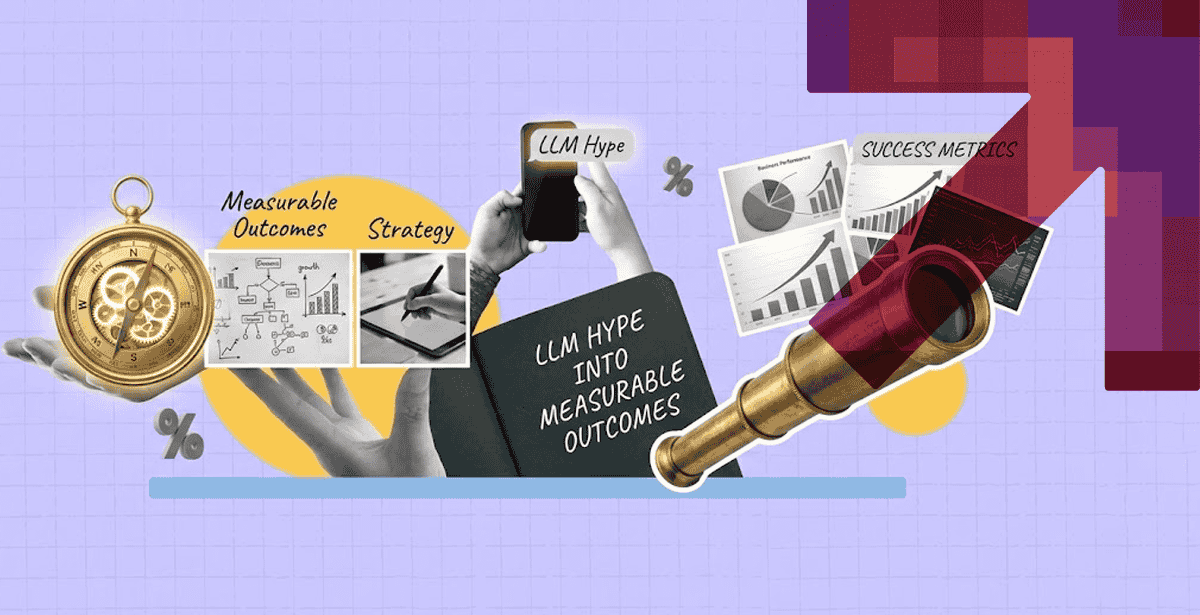
Every enterprise has an LLM pilot running somewhere. Few have a system in production that moves a real KPI. That gap is exactly why generative AI consulting services exist: to turn a promising demo into infrastructure your business can actually depend on.
McKinsey’s latest State of AI survey found that 88% of organizations now use AI regularly in at least one business function. Yet only 39% report any EBIT impact from it, and just one-third have scaled their programs past the pilot stage. The hype cycle produced adoption. It didn’t produce outcomes. Closing that gap is a strategy problem first and a technology problem second.
Why Most Generative AI Pilots Never Reach Production
A chatbot demo is easy. A production LLM system that handles real users, real data, and real failure modes is not. Most pilots stall for three predictable reasons: no clear success metric, no plan for hallucination and drift, and no infrastructure to monitor the model once it ships.
The generative AI market is projected to grow from $22.2 billion in 2025 to $324.7 billion by 2033, a 40.8% CAGR. That growth is pulling in vendors selling wrappers around foundation models with no engineering discipline behind them.
Enterprises that treat generative AI as a procurement decision rather than an engineering discipline end up with exactly what the McKinsey data shows: wide adoption, thin returns.
Add up the pattern and it looks like this: teams pick a flashy use case, wire up an API call to a foundation model, and call it a pilot. Nobody defines what “working” means in numbers. When the demo can’t survive contact with messy real-world data, the project quietly loses its budget line the following quarter.
What Generative AI Consulting Services Actually Deliver
Good generative AI consulting services don’t start with a model. They start with a use case that has a measurable owner, a baseline metric, and a defined failure cost. From there, the work moves through architecture, data readiness, model selection, and a deployment plan built for your actual infrastructure, not a slide deck.
From Experimentation to Enterprise-Grade Systems
The jump from prototype to production is where most internal teams get stuck. It requires retrieval pipelines that don’t leak stale context, evaluation harnesses that catch regressions before users do, and cost controls that keep token spend from becoming an unbudgeted line item.
Where GenAI Consulting Fits in Your AI Roadmap
GenAI consulting isn’t a replacement for your data science team. It’s the layer that connects your existing ML and data infrastructure to the specific demands of large language models: prompt engineering discipline, vector retrieval, and model orchestration across providers like OpenAI, Gemini, Llama, Mistral, and DeepSeek.
Building a Generative AI Strategy That Survives Contact With Production
A generative AI strategy document that lives in a shared drive helps no one. A working strategy ties every initiative to a business metric, a data source, and an owner accountable for the outcome.
Aligning Generative AI Strategy With Business KPIs
Start with the metric you’re trying to move: resolution time, case backlog, cost per document processed, or customer satisfaction. Then work backward to the model and architecture that can realistically move it.
DPL’s work with the Sindh Ombudsman, a government body processing over 1,000 citizen complaints daily, followed exactly that path. The result was a 65% reduction in average resolution time and 92% classification accuracy using generative AI on Amazon Bedrock.
Choosing the Right Model Stack
No single model wins every use case. A strong generative AI strategy treats model choice as a live decision, weighing latency, cost, data residency, and accuracy across the current generation of Llama, Mistral, DeepSeek, OpenAI, Gemma, and Gemini models rather than locking into one vendor by default.
LLM Consulting Services: Turning Models Into Reliable Systems
Once the strategy is set, LLM consulting services handle the harder engineering problem: keeping a language model grounded, current, and auditable once real users start relying on it.
RAG, Fine-Tuning, and LLMOps as the Backbone
Retrieval-augmented generation keeps model outputs tied to your actual data instead of frozen training knowledge. DPL builds RAG pipelines on Pinecone, ChromaDB, and GraphRAG to ground answers in verified sources rather than guesswork.
💡Treat retrieval quality as seriously as model quality. Effective RAG implementation services depend on more than connecting an LLM to a vector database. Use clean source data, meaningful metadata, effective chunking, and retrieval evaluation to ensure the model receives the right context. Better retrieval means fewer irrelevant results, fewer hallucinations, and answers that remain grounded in trusted enterprise knowledge.
Fine-tuning adjusts a model’s behavior for your domain language and edge cases. LLMOps keeps the whole system observable: tracking drift, latency, and cost after launch the same way DevOps tracks uptime.
Why Generative AI Advisory Matters Before You Write a Line of Code
Generative AI advisory exists to answer the questions a pilot always skips: what happens when the model is wrong, who reviews its output, and what data it’s legally allowed to touch.
Risk, Governance, and Guardrails
Enterprises in healthcare, finance, and government carry compliance obligations a generic AI vendor won’t account for. DPL is ISO 27001 and 27701 certified, and our generative AI advisory work builds guardrails around data handling, model access, and output review before deployment, not as a retrofit after an incident.
💡Build compliance into the AI architecture from day one. Enterprise generative AI deployments need guardrails that reflect the organization’s regulatory and data-handling requirements. Define access controls, data protection policies, audit trails, human-review requirements, and output validation before deployment. Retrofitting these controls after an incident is far more costly—and harder to govern—than designing them into the system from the start.
Generative AI Development Services: From Blueprint to Deployment
Strategy and advisory set the direction. Generative AI development services build the system: the retrieval layer, the orchestration logic, the fine-tuned model, and the monitoring dashboard that keeps it accountable.
Proof of Concept First, Scale Second
Skipping the proof-of-concept stage is how six-figure LLM projects die quietly in a demo environment. A structured proof of concept validates the use case against real data and real users before full-scale generative AI development services commit engineering time to building it out.
DPL’s development work with the Pause. Breathe. Reflect. wellness platform followed this path: the Michael AI Bot uses NLP to read user emotion in real time and recommend guided sessions from a library of over 2,000 practices, built and validated before it reached full production scale.
What Measurable Outcomes Actually Look Like
Numbers are the whole point of this exercise. Across DPL’s generative AI engagements, measurable outcomes have included a 65% cut in complaint resolution time for a government agency, a 42% increase in citizen satisfaction, and 99.9% platform availability at scale. These are not projections. They are results from systems already running in production.
Document-heavy operations tell a similar story. DPL’s work automating classification and data extraction for a US facility management client processing over 50,000 work orders daily saved 400 hours of manual labor per week.
That’s what a properly scoped generative AI development services engagement looks like when it’s measured honestly: hours saved, costs cut, and error rates that hold steady as volume grows.
That’s the difference generative AI consulting services are supposed to make: not another pilot, but a system your business can point to on a dashboard.
Frequently Asked Questions
What’s included in generative AI consulting services?
Typically: use case scoping, generative AI strategy, model and architecture selection, a proof of concept, full development, and post-launch monitoring through LLMOps.
How is generative AI strategy different from a general AI roadmap?
Generative AI strategy focuses specifically on large language model use cases: retrieval, grounding, prompt design, and governance, layered on top of an organization’s broader AI and data roadmap.
Do I need LLM consulting services if I already have a data science team?
Often yes. LLM systems require specialized skills in retrieval architecture, prompt evaluation, and model orchestration that differ from traditional ML model development, even for strong existing teams.
How long does a generative AI consulting engagement typically take before showing results?
A scoped proof of concept can validate a use case in four to eight weeks. Full production deployment timelines vary with data readiness and integration complexity, but the goal at every stage is a measurable checkpoint, not an open-ended build.
Turning Hype into a System You Can Measure
The gap between LLM hype and LLM value isn’t a model problem. It’s an engineering and strategy gap that generative AI consulting services are built to close.
DPL has shipped generative AI systems across government, healthcare, finance, and wellness that produce results you can put in a board deck. If your organization is ready to move past the pilot stage, explore DPL’s generative AI solutions or start with a scoped proof of concept before committing to full-scale development.

Topics
Related Articles
-

Speech Recognition Services – Building Accurate Voice-to-Text for Enterprise Applications
19-Aug-2026 Salman Naseer
-
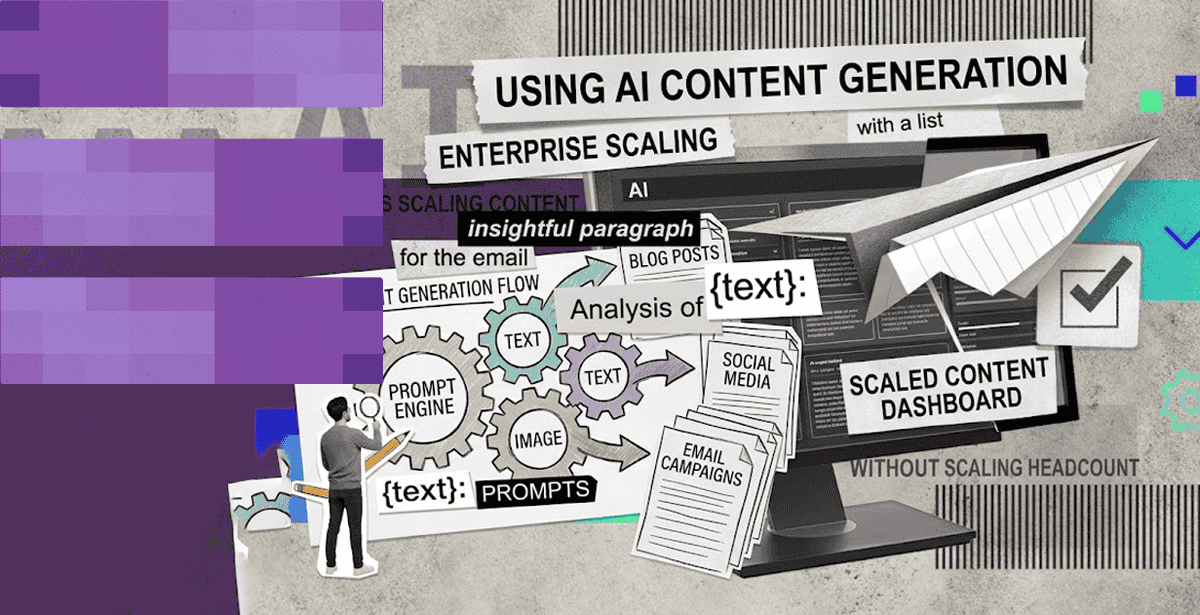
How AI Content Generation Helps Leading Enterprises Scale Content Production
18-Aug-2026 Maha Yaser
-
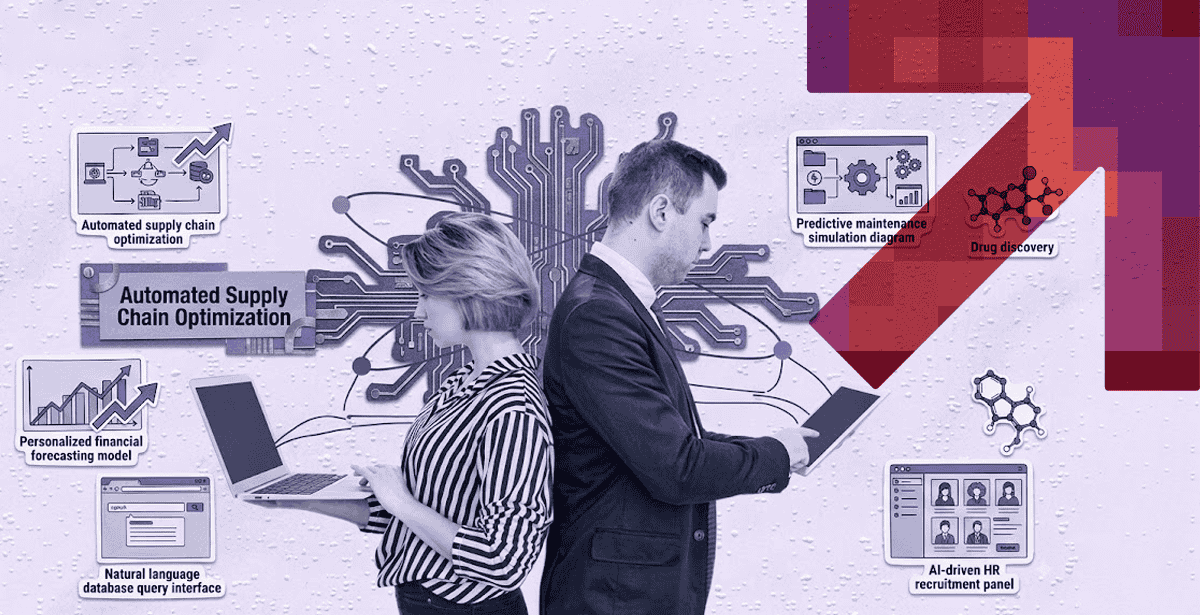
Generative AI for Business – High-Value Use Cases That Drive ROI
12-Aug-2026 Waleed Riaz