
Zero Trust Network Access (ZTNA) Explained – The Modern Alternative to VPNs

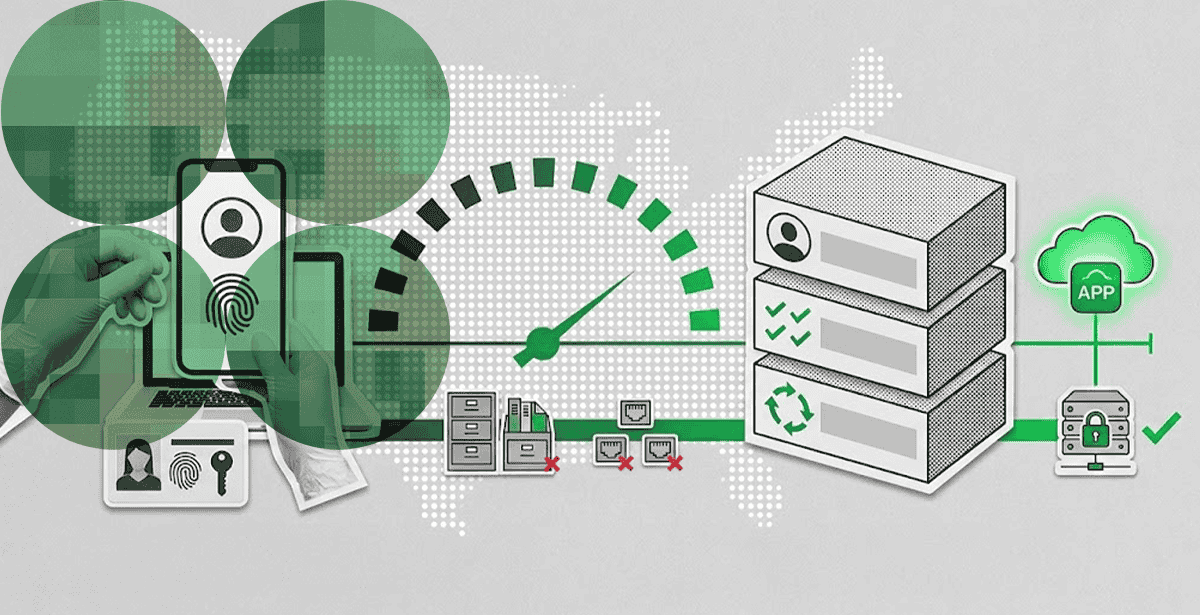
VPNs assume that once you are inside the network, you can mostly be trusted. That assumption is exactly what attackers exploit once they get past the perimeter.
Verizon’s 2025 Data Breach Investigations Report found that 22% of vulnerability-exploitation breaches targeted edge devices, including VPN concentrators. That is an eightfold jump from just 3% the year before.
Zero trust network access takes a different approach entirely. It never grants broad network access based on location alone. This post breaks down how ZTNA actually works, and why it is replacing VPNs now.
Why Zero Trust Network Access Is Replacing the VPN Model
ZTNA verifies identity and context before granting access to anything. It never assumes trust just because a device is already connected to the network.
A traditional VPN grants access to an entire network segment once authenticated. ZTNA instead grants access to one specific application, for one verified session only.
That distinction matters enormously during a breach. A compromised VPN credential can expose an entire network segment. A compromised ZTNA session exposes only the single application it was scoped to reach.
Zero Trust Solutions Start with Identity, Not Network Location
Zero trust solutions treat identity as the primary control point, not network location. Where a request comes from matters far less than who and what is making it.
Verifying Every Request, Not Just the Initial Login
A VPN typically checks identity once, at login. After that, the session stays broadly trusted for its entire duration.
Zero trust solutions verify continuously instead. Every request gets evaluated against identity, device posture, and context together. A session that looked legitimate at login can still get blocked later if conditions change.
This continuous verification is what closes the gap VPNs leave open. Sophos found that 12% of ransomware cases in 2025 started with a vulnerable VPN. Many of those cases involved credentials that stayed trusted far too long.
Device Posture as a Continuous Signal
Identity alone does not tell the whole story about a request. Device posture matters just as much. Zero trust solutions treat it as a live signal, not a one-time check at login.
A device that was healthy yesterday can be compromised today. Continuous posture checks catch that shift immediately, instead of waiting for the next login cycle to notice anything wrong.
Zero Trust Implementation Requires More Than a Product Purchase
Zero trust implementation is a process, not a single tool you install and forget about. Buying a product without redesigning access policy accomplishes very little on its own.
Mapping Access Before Enforcing It
The first implementation step is mapping who actually needs access to what. Most organizations discover far broader access grants than anyone remembers approving in the first place.
From there, policies get built around least privilege. Every user and service gets only the access it genuinely needs right now. Nothing more, and nothing left over from a role that changed months ago.
DPL’s PAF air-gapped Kubernetes deployment put these principles into practice for a defense organization. That platform now runs over 100 containerized microservices. It maintains zero external connectivity and zero recorded security incidents.
Rolling Out Zero Trust in Stages
Rolling out zero trust implementation in one shot, across an entire organization, rarely works well. A phased rollout by application surfaces problems while the blast radius is still small.
Starting with the highest-risk applications first makes the most sense strategically. That approach delivers the biggest security improvement earliest in the rollout. Visible early wins also make the rest of the rollout easier to justify internally.
Zero Trust Network Architecture: The Components That Make It Work
Zero trust network architecture is built from a few core components working together. Understanding each one clarifies what ZTNA actually replaces in the network stack.
NIST’s SP 800-207 defines the architecture around a policy engine, a policy administrator, and policy enforcement points. Every access request flows through this evaluation chain before it gets granted.
The policy engine decides whether to grant access. That decision weighs identity, device health, and context together. The policy administrator then carries out that decision, issuing or denying a session token accordingly.
Policy enforcement points sit closest to the actual protected resource. They act as the last checkpoint before a request reaches an application. This checkpoint verifies the policy decision one final time.
This layered structure has a real advantage over VPN architecture. A VPN concentrator is a single choke point for the whole network. Zero trust network architecture distributes trust decisions instead, so no single component becomes a catastrophic point of failure.
Zero Trust Security Solutions in Practice
Zero trust security solutions look different depending on what they protect. Workforce access, workload-to-workload communication, and device access all need slightly different enforcement patterns.
Workforce access solutions replace the traditional VPN client most directly. A remote employee reaches one specific internal application. They never join the broader corporate network to get there.
Workload-to-workload zero trust security solutions apply the same logic between services. This approach helps organizations enforce consistent identity, access, and security policies across distributed and multi-cloud environments.
🔥 Hot tip! Build one security baseline across every cloud. Effective multi-cloud security starts with defining common requirements for identity, access, encryption, logging, and threat detection across AWS, Azure, and GCP. Automate policy enforcement wherever possible, and continuously monitor for configuration drift so a workload remains protected even when it moves between providers or spans multiple environments.
Device-level enforcement is the third piece of the puzzle. It checks device posture, not identity alone. A verified user on a compromised device should still be denied access under a real zero-trust policy.
Zero Trust as Part of a Broader Cloud Security Framework
ZTNA is not a standalone product you deploy in isolation. It should function as one layer inside a broader cloud security framework spanning identity, data, and compliance together.
CISA’s Zero Trust Maturity Model frames this clearly, across five distinct pillars. Identity, devices, networks, applications, and data all need coordinated zero-trust controls, not isolated point solutions bolted together.
DPL’s own SOC 2 compliance checklist reflects this same layered thinking. Zero trust access controls support several SOC 2 criteria directly. They do not satisfy every requirement on their own, though.
Getting this integration right usually benefits from outside expertise. DPL’s managed cloud services include security and compliance management. That work is a core part of ongoing operations, not an afterthought.
What Happens to Existing VPN Infrastructure During Migration
Most organizations do not rip out their VPN on day one of a zero trust rollout. Migration usually happens application by application, over weeks or months.
During that window, the VPN keeps serving applications that have not migrated yet. ZTNA gradually takes over each application as its access policy gets defined and tested properly.
This staged approach reduces risk considerably. A single misconfigured policy affects one application, not the entire remote workforce all at once. That containment is itself a core zero-trust principle in action.
Once every application has migrated, the VPN can usually be decommissioned entirely. Some organizations keep a minimal VPN for narrow edge cases. Legacy hardware that cannot support modern authentication is a common example.
Common Mistakes When Adopting Zero Trust Network Access
A few mistakes show up repeatedly during ZTNA rollouts. Watch for these before they become expensive to unwind later on.
Treating ZTNA as a one-time VPN swap is a common mistake. Buying the product without redesigning access policy just moves the same broad-trust problem onto new software.
Skipping the access-mapping step is another frequent mistake. Teams that skip auditing existing access first inherit years of accumulated over-permissioning into the new system.
Ignoring device posture checks rounds out the list. Verifying identity alone still leaves a real gap open if the device itself is compromised.
Frequently Asked Questions
Is zero trust network access the same thing as a VPN replacement?
It replaces the VPN’s function, but works very differently underneath. ZTNA grants per-application access instead of broad network-level trust.
Do small organizations need zero trust network access?
Yes, though the rollout can be smaller in scope. Even a small team benefits from limiting access to specific applications instead of an entire network.
How long does zero trust implementation typically take?
It varies by organization size and existing access complexity. Most rollouts take a few months when phased by application or business unit.
Can zero trust network architecture work alongside an existing VPN?
Yes, during a transition period. Many organizations run both while migrating applications over to ZTNA, then retire the VPN once migration completes.
What is the biggest difference between zero trust and traditional perimeter security?
Perimeter security trusts everything inside the network boundary. Zero trust verifies every request individually, regardless of where it originates from.
The Bottom Line
Zero trust network access closes a gap that VPNs were never designed to close. Broad, location-based trust does not hold up against modern attack patterns anymore.
Zero trust network architecture verifies identity and context continuously instead. It treats every request as unverified until proven otherwise. That shift matters more each year, as edge devices keep drawing attacker attention.
DPL’s cloud and DevOps services build zero-trust principles directly into cloud architecture from the start. Talk to us about where your current VPN is creating risk you can no longer justify.

Topics
Related Articles
-
Kubernetes vs Docker – Choosing the Right Tool for Containerized Applications
22-Aug-2026 Hazar Hayat
-

Best Continuous Integration Tools in 2026 – GitLab, Jenkins, and AWS CodePipeline Compared
21-Aug-2026 Asif Ali
-

Strategies for Controlling Multi-Cloud Management Complexity Without Losing Agility
19-Aug-2026 Hazar Hayat