A Practical Guide to Embedded Software Development

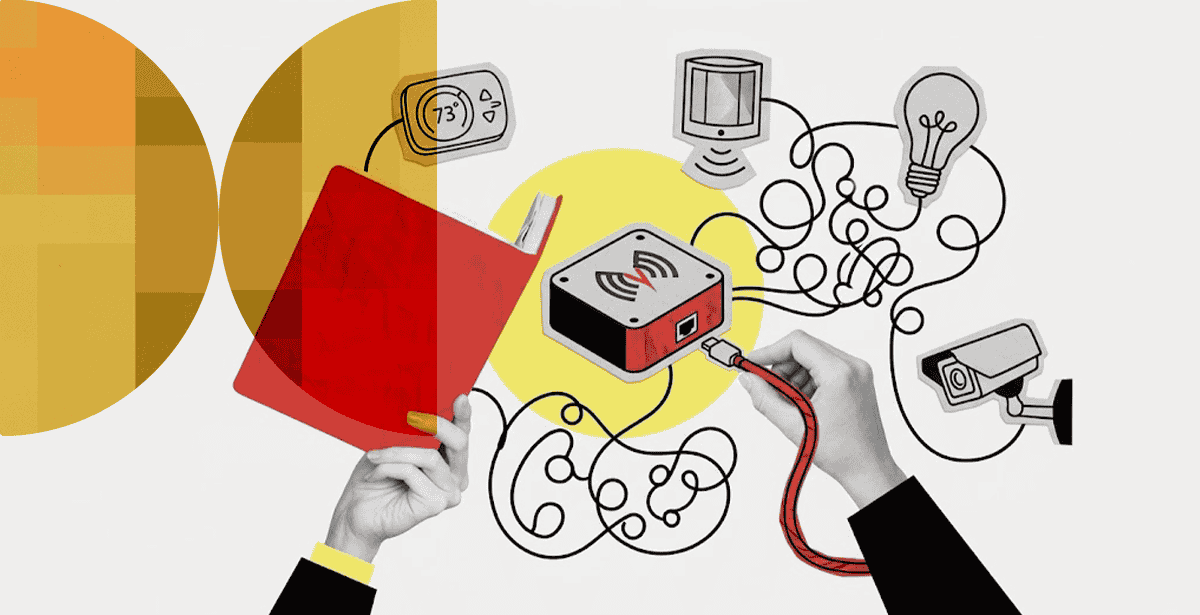
Every connected device runs on code most users never see. Embedded software development is what turns a circuit board into a product people trust.
Get it wrong, and the failure shows up as a dead sensor or a bricked device in the field. Get it right, and the hardware simply disappears into the experience.
If you’re still new to this world, the following guide will explain everything you need to know.
What Embedded Software Development Involves
Embedded software development is the discipline of writing code that runs directly on dedicated hardware, not general-purpose computers. It controls sensors, actuators, and communication modules under tight resource limits.
Unlike a web app, embedded code often has no operating system cushioning its mistakes. A crash can mean a locked door or a stalled production line, not just a browser refresh.
That responsibility shapes everything about how this code gets written. Every decision trades off memory, power, and reliability against features and time to market.
Most teams underestimate how many disciplines this work actually touches. Hardware selection, real-time scheduling, and long-term maintenance all belong in the same conversation from day one.
The lifecycle also looks different from typical software projects. Concept, firmware, hardware-in-the-loop testing, and field validation each need dedicated time before a product ever reaches a customer.
A capable team usually blends hardware engineers, firmware developers, and cloud engineers under one roadmap. Splitting those roles across separate vendors is a common source of costly integration surprises.
Firmware Development: The Foundation Every Device Depends On
Firmware development sits at the lowest layer of any connected product, closest to the silicon itself. It’s the first code that runs when a device powers on.
Memory here is often measured in kilobytes, not gigabytes. Every function call and every buffer allocation has a real, measurable cost against a hard ceiling.
Battery life depends directly on how efficiently that firmware manages sleep states and peripheral wake-ups. A sloppy polling loop can cut device lifespan in half.
DPL’s firmware development team treats this layer as its own discipline. It never gets folded into general application work, where these constraints get overlooked.
Getting firmware right the first time matters more than it does anywhere else in the stack. A bug shipped to ten thousand deployed units usually requires physical access to fix.
Over-the-air updates need redundancy designed in specifically to avoid bricking a fleet during a failed rollout. A/B partitioning keeps a known-good image available while a new one installs safely in the background.
Rollback logic deserves the same attention as the update mechanism itself. A device that can’t recover from a bad push becomes a truck-roll problem instead of a software fix.
Embedded Systems Programming: Languages, Constraints, and Tradeoffs
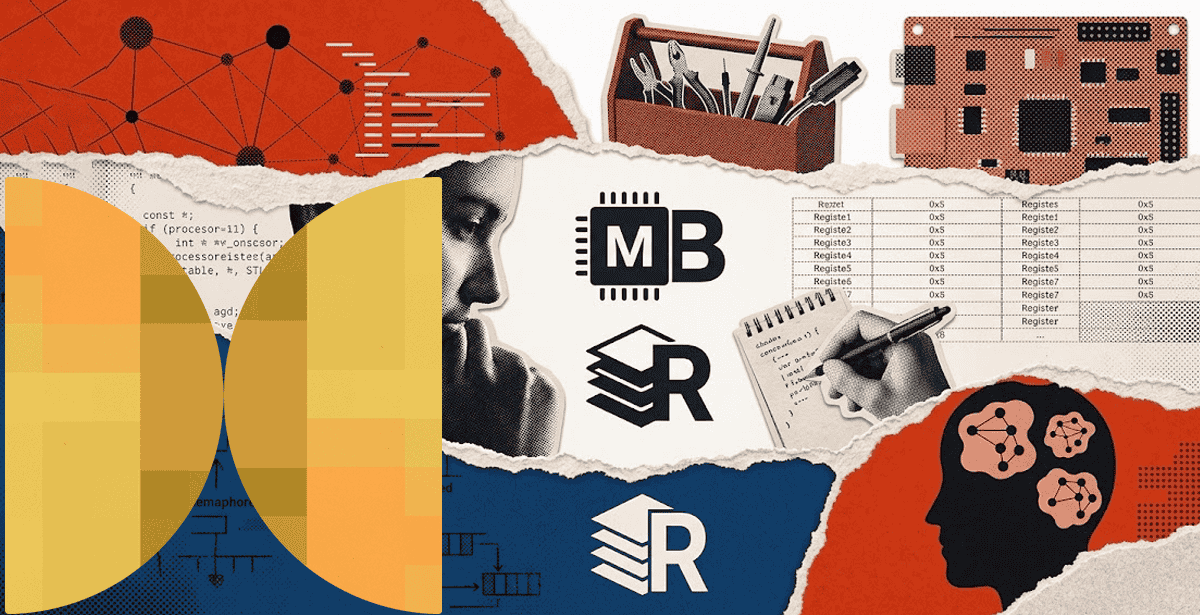
Embedded systems programming still leans heavily on C and C++ for one simple reason. Both give developers direct control over memory and timing that higher-level languages abstract away.
Rust has been gaining ground fast, particularly where memory safety bugs carry serious consequences. It catches entire categories of errors at compile time instead of in the field.
Real-time constraints separate this work from almost every other kind of programming. A missed deadline in a braking system or medical device isn’t a performance issue. It’s a safety failure.
Interrupt handling is where a lot of embedded programming mistakes actually happen in practice. Code that works fine in isolation can behave unpredictably once interrupts start competing for the same resources.
Static analysis tools catch many of these issues before hardware is even involved. Teams that skip this step often find the same class of bug repeating across every product generation.
Debugging looks fundamentally different here too, and that trips up developers coming from application backgrounds. JTAG probes and logic analyzers replace the console logs and breakpoints most software engineers rely on daily.
A bug that only appears after weeks of continuous runtime is common in this world. Memory leaks and timing drift rarely show up in a quick bench test.
Case Study: Smart Workforce Tracking Across 18,000 Facilities
Our work with National Janitorial Solutions is a great example to showcase how embedded software works.
The nationwide janitorial services company needed real-time visibility into where its workforce actually operated across the country. Existing tools offered no reliable indoor location data at scale.
GPS doesn’t work reliably inside large commercial buildings, which ruled out the obvious off-the-shelf approach. The team needed something purpose-built for indoor environments at national scale.
DPL built a WiFi infrastructure-based indoor location tracking system paired with embedded firmware running on lightweight tracking hardware. The system monitors productivity without requiring GPS, which fails indoors entirely.
The results reflect what disciplined embedded engineering makes possible at national scale. The platform now covers more than 50,000 workers across 18,000-plus locations in all fifty states.
Embedded Software: Where Code Meets the Real World
Embedded software is judged by a different standard than most application code ever faces. It has to keep working correctly for years, often without a single update cycle.
Testing looks different here too, and that difference trips up teams moving from cloud-first backgrounds. Hardware-in-the-loop testing catches failures that pure simulation simply cannot surface.
Environmental durability adds a layer most software-only teams underestimate entirely. Temperature swings, vibration, and humidity all affect behavior in ways a lab environment rarely replicates.
Long product lifecycles create their own maintenance burden most teams don’t plan for upfront. A device shipped today may need security patches a decade from now, long after the original engineers have moved on.
Documentation matters enormously for exactly that reason. Code that makes sense to its author today needs to make sense to someone else years later. That successor is often under real time pressure.
The market reflects just how central this work has become to modern products. Grand View Research values the embedded software market at $19.2 billion in 2025, growing toward $42.6 billion by 2033.
That growth traces directly back to how many products now ship with a connected, software-defined core. Cars, appliances, and industrial equipment all depend on this same discipline today.
Embedded Systems Design: Getting the Architecture Right from Day One
Embedded systems design decisions made early are brutally expensive to reverse later. Choosing the wrong microcontroller can force a full hardware respin months into a project.
That respin cost is rarely just the silicon itself. Tooling, certification, and re-testing all get dragged along with it, turning a small early mistake into a six-figure delay.
Requirements discovery deserves real time before any chip gets selected. Power budget, connectivity range, and expected product lifespan all narrow the field of viable hardware considerably.
Security has to enter this conversation from the very first architecture sketch, not after launch. NIST’s IoT device cybersecurity guidance recommends baking device identity into the design from day one.
Waiting until firmware is nearly finished to think about security almost always means retrofitting it. Retrofits are more expensive, less thorough, and harder to verify than security built in from the start.
Signed firmware images that reject unsigned updates close off an entire category of supply-chain attack early. That single design choice prevents a lot of downstream incident response work later.
Certificate management deserves the same early planning. Rotating device identities at fleet scale is hard to bolt on after launch. Building it in from day one avoids that scramble entirely.
Power budgeting belongs in this same early conversation, well before a single line of firmware gets written. A battery-powered sensor rated for five years can die in five months if design assumptions are wrong.
Field conditions rarely match lab assumptions exactly, which is why margin matters in every power calculation. A sensor that barely meets its target in ideal conditions will likely fall short outdoors.
Modularity matters just as much as any single technical choice made here. A design that isolates hardware-specific code from business logic survives a component swap far more gracefully.
A hardware abstraction layer is one of the more reliable ways to build in that separation. It lets the same application logic run across multiple hardware revisions without a full rewrite each time.
Scalability across an entire product line deserves consideration too, not just the first unit shipped. A design that only works for one SKU often gets rebuilt entirely once a second model enters the roadmap.
IoT Software Development: Where Embedded Meets the Cloud
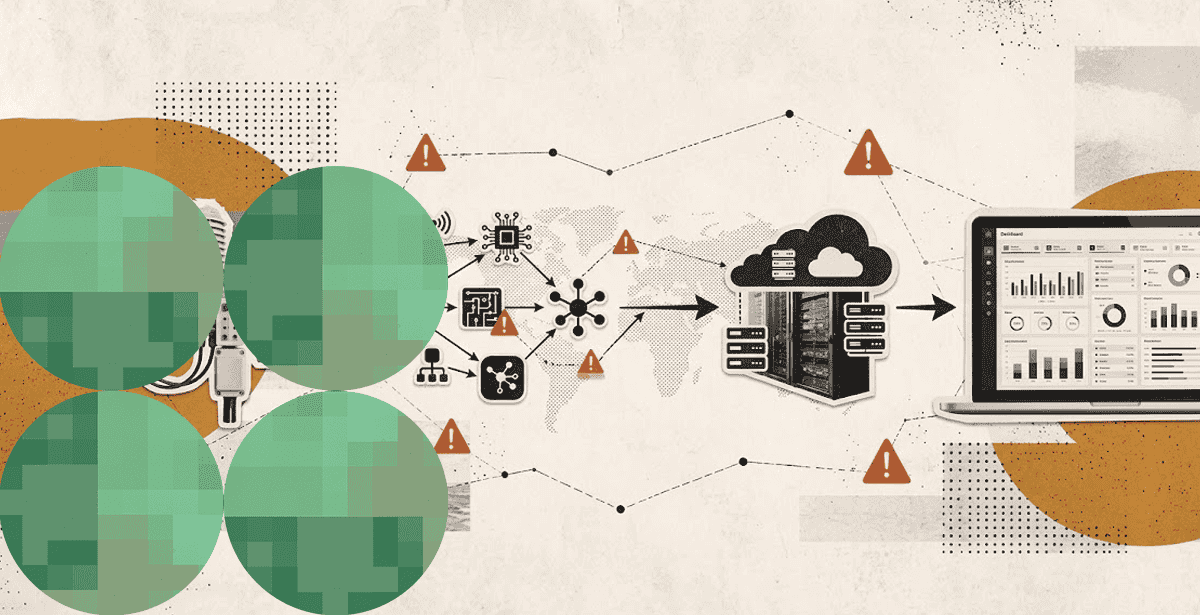
IoT software development is where embedded devices stop being isolated and start becoming part of a larger system. Data has to move reliably from sensor to dashboard.
That handoff is where a lot of otherwise solid embedded work quietly falls apart in production. A device that works perfectly offline can still fail if its cloud integration wasn’t designed together with the firmware.
Device shadows and fleet management platforms depend entirely on firmware reporting state accurately and consistently. Sloppy embedded code here shows up later as confusing, unreliable dashboards.
Protocol choice shapes firmware size and power draw in ways that ripple through the entire design. MQTT’s small message overhead makes it a common choice for constrained, battery-powered devices.
HTTP remains simpler to implement and debug, which still makes it the right call for less constrained devices. The tradeoff is bandwidth and battery life, not correctness.
Our IoT development services bridge this exact gap between device-level code and cloud-level visibility. Neither side works well without the other being built with real intention.
Fleet-scale deployments raise the stakes on this handoff considerably. A firmware bug that silently corrupts reported state can mislead an entire dashboard before anyone notices the root cause.
Message volume planning matters here too, well before launch day arrives. A fleet of ten thousand devices reporting every second creates a very different load profile than one reporting hourly. Firmware has to be tuned for whichever profile the deployment actually needs.
Connectivity choice also shapes how embedded software gets structured from the start. Bandwidth, range, and power all trade off differently depending on which network a device relies on.
LoRaWAN and cellular each solve a different piece of that puzzle. Firmware has to be built around whichever technology actually fits the deployment. That decision ripples all the way up the stack.
Building Embedded Software That Ships and Keeps Shipping
Embedded software development succeeds when firmware, hardware, and cloud logic get planned together, not bolted on in sequence. Treating any one layer as an afterthought is how projects stall.
The best teams budget for testing, security, and long-term maintenance from the very first design review. That discipline separates a device that ships once from one that keeps working for years.
None of this happens by accident. It takes engineers who have shipped hardware at scale and watched what breaks after the demo ends. Those same engineers fix it for good.
DPL has shipped embedded systems across proptech, logistics, and facility management deployments running at real scale. Our work spans firmware and cloud integration alike, backed by engineers who own both sides of that handoff.
So, let us know how our experience and expertise can benefit your upcoming project.