
IoT Data Management – A Guide to Storing and Processing Billions of Data Points

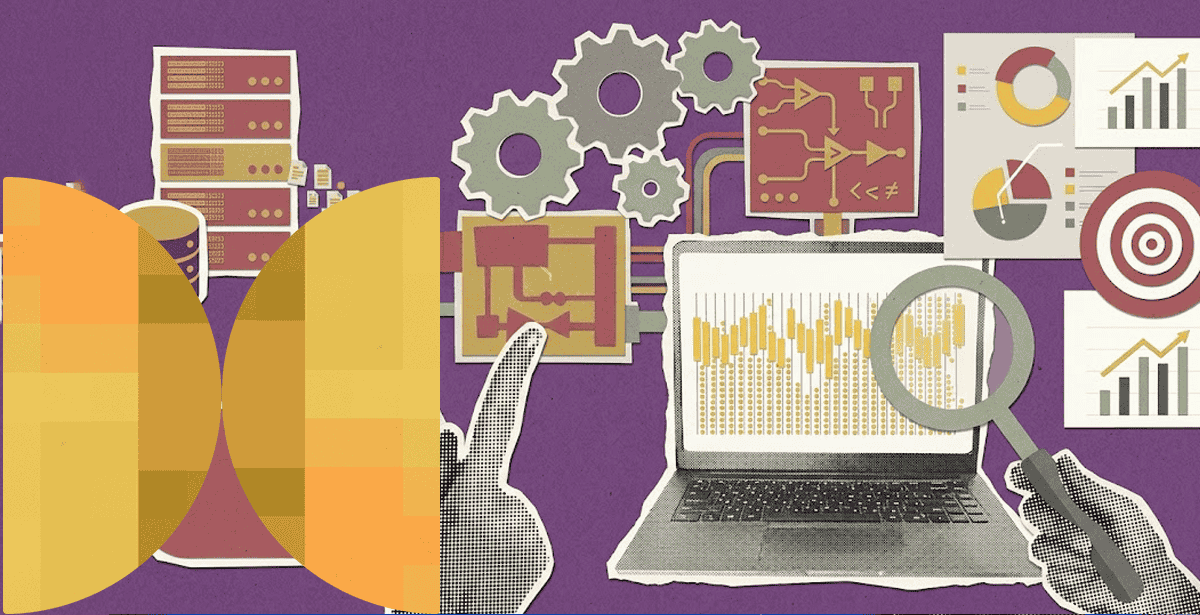
A single connected sensor produces a trickle of data. A fleet of a hundred thousand sensors produces a flood most systems were never designed to handle.
IoT data management is the discipline of taming that flood without losing the details that actually matter. Storage, processing, and querying each need their own deliberate architecture. Something this guide will help you with.
IoT Data Analytics: Turning Volume into Something Usable
IoT data analytics creates value when raw telemetry becomes something a person or system can act on. Volume alone means little without that translation.
Sensor data often contains noise, gaps, duplicates, and bad readings. Cleaning it before analysis is essential because poor-quality data can undermine every downstream result.
Anomaly detection is a common use case. Identifying a failing sensor or operational issue depends on having a reliable underlying signal. False positives can quickly erode trust, making it important to tune detection thresholds against real historical data rather than generic defaults.
According to Grand View Research, the global IoT data management market reached USD 110.9 billion in 2026 and is projected to reach USD 170.7 billion by 2030.
Real-time and batch analytics both have a role. Real-time analytics catches urgent issues, while batch analysis reveals longer-term patterns. Classifying metrics appropriately helps avoid unnecessary infrastructure costs and alert fatigue.
💡 Data becomes valuable when it can drive a decision or trigger an action. IoT integration connects analytics outputs with enterprise applications, dashboards, workflows, and operational systems so insights can reach the teams and processes that need them. Without this connection, even accurate IoT analytics can remain isolated from the business.
IoT Cloud Platform: Where Data Management Actually Lives
An IoT cloud platform is the infrastructure layer where most data management decisions get implemented in practice. Ingestion, storage, and processing pipelines all run somewhere on top of this layer.
Choosing that platform shapes what data management options are realistically available later. A platform with weak time-series support forces awkward workarounds for what should be a straightforward query.
Retrofitting proper time-series support onto a platform that lacks it is possible, but rarely cheap. Evaluating this capability before committing to a platform saves that retrofit entirely.
💡 Platform choice should account for how your data will be managed long after devices are connected. Choosing an internet of things platform such as AWS IoT Core or Azure IoT Hub means evaluating ingestion, time-series data handling, processing capabilities, integrations, security, and scalability, not just device connectivity. Making these decisions early can prevent costly architectural changes as the IoT environment grows.
The above is actually based on our observations working with NLC over the years.
The national logistics operator needed a terminal operating system capturing continuous data from RFID readers and vehicle monitoring hardware. Manual, paper-based tracking could not keep pace with cargo volume.
DPL built a system now deployed at a major border terminal, capturing gate-out and warehouse management data around the clock. Every vehicle movement, gate event, and cargo transaction gets logged and queried continuously.
The results demonstrate what disciplined IoT data management delivers under real, sustained operational load. Dwell time dropped considerably, and cargo transparency improved across every stage of the terminal process.
None of that improvement would hold up without a data architecture built to keep pace with continuous capture. A system that falls behind during peak volume creates the exact blind spots this project set out to eliminate.
If this piques your interest, you can read the whole NLC Terminal Operating System case study for further details.
IoT Dashboard: Making Billions of Points Legible to a Human
An IoT dashboard is where all this backend architecture finally becomes visible to an actual person. It’s also where a lot of otherwise solid data management work goes to waste.
A dashboard showing every raw data point overwhelms rather than informs the person viewing it. Aggregation and thoughtful visual hierarchy matter as much as the underlying query performance.
Good dashboard design starts with a specific decision the viewer needs to make, then works backward from there. Starting from available data instead, and hoping a useful view emerges, rarely works well.
Latency expectations differ sharply depending on the dashboard’s actual purpose within an organization. An operations team monitoring live equipment needs near-real-time data; an executive reviewing monthly trends does not.
Building both experiences on the same rigid data pipeline usually satisfies neither group well. Purpose-built views, drawing from the same underlying data, tend to serve both audiences considerably better.
Role-based views deserve real design attention here, since different stakeholders need genuinely different slices of the same dataset. A field technician and a facilities director rarely want to see the same screen.
💡 A dashboard should make the next action obvious, not simply display more data. Building an IoT dashboard means translating complex telemetry into role-specific metrics, alerts, and visualizations that help users identify issues and make decisions quickly. Designing around user goals and operational workflows keeps the dashboard useful as data volume and device fleets grow.
IoT Analytics: Choosing Between Real-Time and Batch Processing
IoT analytics architecture forces an early decision between stream processing and batch processing, and getting it wrong is expensive. Each approach suits a different category of problem well.
Stream processing handles problems where a delayed answer is a useless answer, like equipment safety alerts. Waiting an hour to learn about a critical failure defeats the entire purpose of monitoring it.
Batch processing suits problems where the value comes from spotting a slower pattern across a longer time window instead. Monthly usage trends or seasonal demand shifts fall naturally into this category.
A recent IDC estimate found that IoT devices will collectively generate 79.4 zettabytes of data in 2025. That figure comes from 41.6 billion connected devices worldwide. Processing that volume affordably takes real architectural discipline.
Cost differences between the two processing models are substantial and worth modeling before committing to either exclusively. Stream processing infrastructure typically costs more to run continuously than equivalent batch jobs.
Most mature architectures end up running both approaches side by side, applied selectively by data type. Critical safety signals get streamed; slower-moving structural data gets batched on a schedule instead.
That hybrid approach requires more upfront design work than picking a single processing model. It pays for itself quickly once the wrong tool stops getting applied to a problem it wasn’t built for.
IoT Cloud Architecture: Designing Storage That Scales with Data Volume
IoT cloud architecture decisions at the storage layer determine whether querying billions of points stays fast. A slow, poorly designed storage layer grinds every downstream query to a halt. Storage choice is not a detail to defer.
Time-series databases remain the standard choice for this workload, purpose-built for high-volume, timestamped writes. General-purpose relational databases struggle badly once ingestion rates climb into this territory.
Partitioning strategy matters enormously at real scale. It determines whether a query scans a relevant slice of data or the entire dataset. A poorly partitioned table turns a simple query into an expensive full scan.
Indexing decisions compound this effect further, and they need revisiting as query patterns evolve over a project’s lifetime. An index that was fine at launch can quietly become a liability a year later.
Data lifecycle policy ties all of this together. Not every data point needs to live in expensive hot storage forever. Tiered storage, moving older data to cheaper cold storage, keeps costs proportional to actual value.
Compression techniques specific to time-series data can shrink storage costs dramatically without meaningfully hurting query performance. That savings compounds significantly once a dataset reaches billions of stored points.
Let’s Build an IoT Data Management System that Scales
DPL’s IoT development team has built data pipelines processing billions of data points across a range of industries. We are even well-versed in handling hard edge cases, and enjoy the challenges we get.
If you have a project you need the experts to look into, let us know via the form below.

Topics
Related Articles
-
IoT Monitoring – How Operations Teams Gain Real-Time Visibility
04-Nov-2026 Bilal Azhar
-
Choosing the Right IoT Sensor for Temperature, Humidity, Vibration, and Beyond
02-Nov-2026 Umer Shamim Qureshi
-

How to Choose an IoT Cloud Platform for Millions of Connected Devices
21-Sep-2026 Umer Shamim Qureshi