How to Set Up a Mosquitto MQTT Broker for IoT Messaging

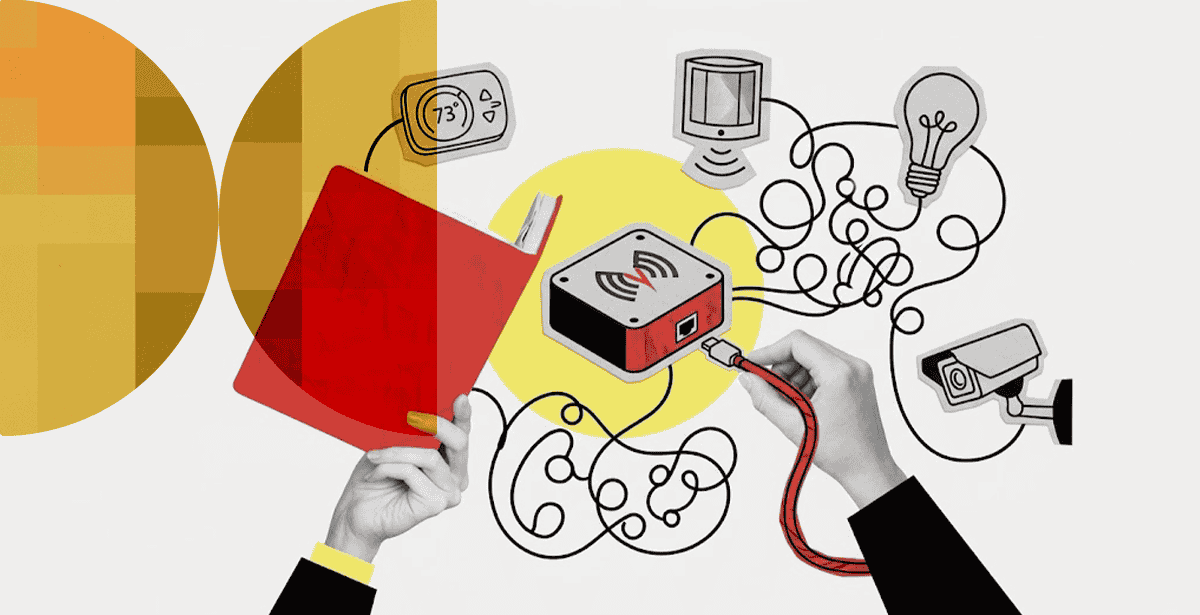
Every connected device needs a way to talk without draining its battery or flooding the network. That’s the exact problem a Mosquitto MQTT broker was built to solve. It has quietly become the default choice behind millions of sensors, locks, and thermostats worldwide.
What Is the MQTT Protocol, and Why It Matters for IoT
The MQTT protocol is a lightweight publish-subscribe messaging standard built for constrained devices and unreliable networks. It was designed in 1999 for monitoring oil pipelines over low-bandwidth satellite links.
That constrained-network origin still shapes every design decision in the protocol today. Message headers are tiny. Devices can sleep between transmissions. Connections stay alive with minimal keep-alive traffic instead of constant polling.
Publish-subscribe is the core pattern. A device publishes a message to a named topic instead of addressing a specific recipient. Any number of subscribers can receive that message without the publisher knowing who they are.
That decoupling is what makes MQTT scale so well. Adding a new subscriber, like a dashboard or an analytics pipeline, never requires touching the devices already publishing data. DPL’s IoT Development practice relies on this pattern across smart building and fleet-tracking deployments alike.
The OASIS-standardized MQTT 5.0 specification formalizes the protocol’s newest features. Reason codes, shared subscriptions, and message expiry intervals all arrived in that version. It gives operators far more visibility into why a message failed than earlier versions ever did.
Understanding the Role of the MQTT Broker
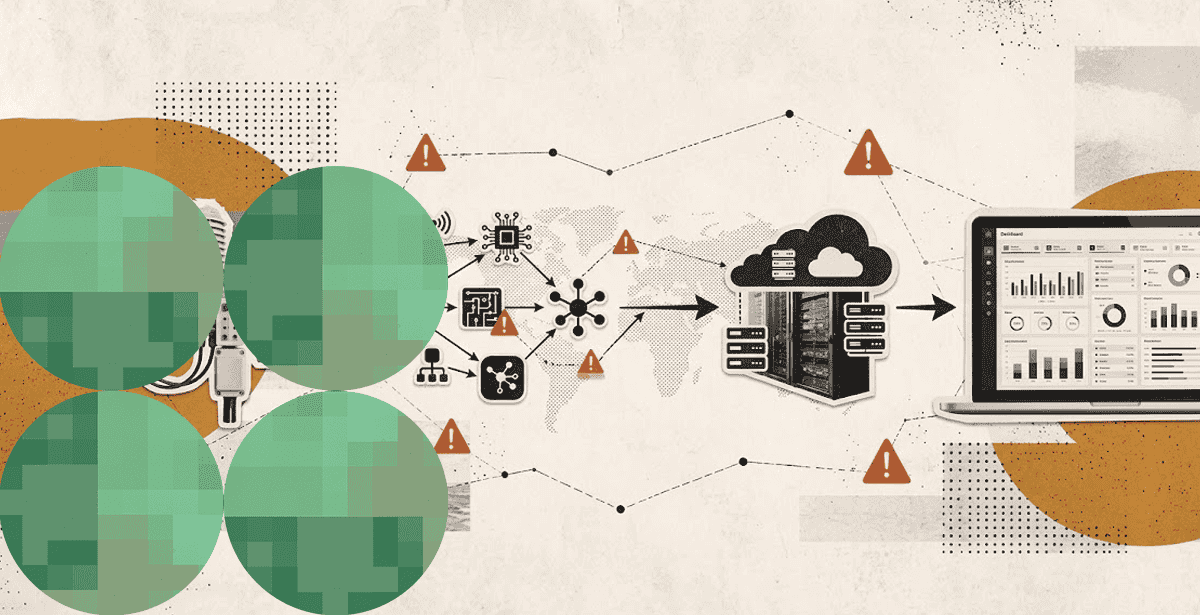
An MQTT broker is the central hub that receives every published message and routes it to the right subscribers. Devices never talk to each other directly. Everything passes through the broker first.
That centralization simplifies device firmware enormously. A sensor only needs to know one address: the broker’s. It doesn’t need any awareness of who else is on the network or how many subscribers exist downstream.
The broker also enforces the quality-of-service guarantees MQTT promises. At QoS 0, a message is sent once with no confirmation. At QoS 1, delivery is guaranteed but duplicates are possible. At QoS 2, exactly-once delivery is guaranteed, at the cost of extra handshake overhead.
Why Mosquitto Is the Default Choice
Eclipse Mosquitto has earned its position as the reference implementation most engineers reach for first. It’s a lightweight, open source broker released under the EPL and EDL licenses. No vendor lock-in comes attached.
Mosquitto supports MQTT versions 5.0, 3.1.1, and 3.1. That covers virtually every client library still in production use today. It runs comfortably on hardware as small as a Raspberry Pi. It also scales up to dedicated servers handling large device fleets.
Its footprint is the real draw for embedded and edge deployments. A default Mosquitto install uses a fraction of the memory that heavier enterprise message brokers demand. That matters when the broker itself sometimes runs on constrained gateway hardware.
Setting Up Your Mosquitto MQTT Broker
Installation itself is simple on any major Linux distribution. A single package manager command pulls in the broker and its command-line client tools, `mosquitto_pub` and `mosquitto_sub`, for quick testing.
The default configuration is intentionally permissive, and that’s the first thing to change. Out of the box, Mosquitto allows anonymous connections with no authentication required at all.
Production configuration means enabling a password file and setting up TLS certificates. It also means defining access control lists that restrict which topics each client can publish or subscribe to. Skipping this step is the single most common Mosquitto mistake teams make.
Firmware-level decisions matter just as much as broker configuration. Trusted firmware development partners such as DPL builds MQTT client behavior directly into device firmware. That includes reconnection logic and local message buffering for connectivity gaps.
Buffering matters more than most teams expect at first. A device that drops messages during a network blip creates gaps in analytics dashboards. A device that buffers and retransmits keeps that historical record intact once connectivity returns.
Case Study: Messaging at Scale for Smart Communities
DPL has been the core technology partner for iApartments since 2019, scaling the platform from MVP through Series A funding. The system now manages more than 200,000 connected IoT devices, including locks, lights, thermostats, and sensors.
Every device publishes state changes and sensor readings continuously across the fleet. That volume demanded a messaging architecture built for sustained throughput, not just occasional bursts of traffic.
The results speak for themselves. The platform now saves an estimated 552,000 manhours annually across its managed properties. It also collects more than 2 million data points from over 30,000 apartments already live on the system.
Perhaps most notably, DPL got the architecture efficient enough to hit a sub-$1 monthly operating cost per device. That’s a direct result of choosing a messaging layer built to handle that volume without buckling.
Read the full iApartments case study for the complete deployment breakdown.
MQTT vs HTTP: Why Protocol Choice Matters for Device Fleets
The MQTT vs HTTP debate comes down to one core difference: persistent connections versus repeated handshakes. HTTP opens a new connection for every request, which is expensive for a battery-powered sensor checking in every few seconds.
MQTT keeps one lightweight connection open and lets messages flow in both directions over it. There’s no repeated TCP and TLS handshake overhead draining the device’s limited power budget with every single message sent.
The publish-subscribe model also solves a coordination problem HTTP was never built for. Getting real-time updates over HTTP requires constant polling. That wastes both bandwidth and battery on requests that usually return nothing new to report.
For a fleet of thousands of devices, that difference compounds fast. Polling architectures buckle under scale in ways that a well-configured MQTT broker simply doesn’t.
IoT Protocols Beyond MQTT: When to Use Something Else
MQTT isn’t the only option among modern IoT protocols, and it isn’t always the right one either. LoRaWAN suits devices that need to transmit occasionally over extremely long ranges with minimal power draw.
Devices like vehicle trackers spread across a wide corporate parking lot fit that profile well. DPL’s vehicle theft prevention deployments use exactly this kind of long-range, low-power messaging instead of MQTT.
Zigbee and Z-Wave remain common in consumer smart-home hubs. That’s largely for historical and certification reasons, not any inherent technical advantage over MQTT.
The right choice always depends on power budget, range requirements, and existing hardware certifications. A protocol decision made early is expensive to reverse once thousands of devices ship with it baked into firmware.
Most production IoT architectures end up running more than one protocol at once. A gateway device often bridges a low-power sensor network on one side.
It speaks LoRaWAN or Zigbee there, then forwards everything into a Mosquitto MQTT broker on the other side. That broker becomes the single point where all telemetry converges before reaching the cloud.
Choosing that convergence point deliberately matters. Letting it emerge by accident instead leads to a tangle of point-to-point integrations nobody fully understands a year later.
Mosquitto vs. AWS IoT Core: Self-Hosted or Managed?
Self-hosting Mosquitto gives you full control over configuration, data residency, and cost at scale. It also means you own the operational burden of patching, scaling, and securing the broker yourself.
AWS IoT Core offers a managed MQTT-compatible broker instead. It bundles device authentication, device shadows, and rule-based message routing into other AWS services. That removes the operational burden entirely, at a different cost structure.
The right answer depends heavily on scale and team capacity. A startup validating an idea with a handful of devices often moves faster on a managed service. An enterprise running hundreds of thousands of devices may find a well-tuned, self-hosted cluster meaningfully cheaper over time.
Some organizations run both. A self-hosted Mosquitto tier handles high-frequency internal telemetry, while AWS IoT Core manages external device onboarding and identity. That hybrid pattern is more common in mature deployments than it might first appear.
Hardening Your Broker for Production
TLS encryption for every connection is non-negotiable outside a lab environment. Plaintext MQTT traffic exposes device credentials and payload data to anyone on the same network segment as the broker.
Client certificates, not just passwords, are worth the added setup effort for fleets handling sensitive data. X.509 certificate-based authentication is significantly harder to spoof than a leaked password ever is.
Rate limiting and connection caps protect the broker from both malicious actors and misbehaving devices stuck in a reconnect loop. A single faulty device retrying every second can otherwise overwhelm a broker meant to serve thousands of well-behaved ones.
Monitoring the broker itself matters as much as monitoring the devices connected to it. Our securing IoT guide covers the broader threat model every connected deployment needs to plan around, broker included.
Logging every connection and disconnection event gives you the audit trail needed to investigate incidents after the fact. Without it, diagnosing why a device dropped offline becomes pure guesswork.
Capacity planning deserves its own attention before launch, not after. A broker sized for a pilot of fifty devices behaves very differently once ten thousand devices connect at once. Load-test the broker against realistic connection and message-rate patterns before it ever reaches production traffic.
Clustering and bridging deserve consideration too, once a single broker instance approaches its practical ceiling. Mosquitto supports bridging between broker instances, letting you split load geographically or by device type without redesigning the whole architecture.
Getting the Foundation Right
A Mosquitto MQTT broker is a small piece of software carrying an outsized share of your IoT architecture’s reliability. Getting the setup right early avoids expensive rework once thousands of devices depend on it.
DPL has scaled this kind of messaging architecture before. Deployments have grown from a handful of pilot devices to platforms managing hundreds of thousands in production. That experience shapes every broker configuration, firmware decision, and hardening step recommended in this guide.
Our IoT development services work covers exactly this kind of return-on-investment question for teams still scoping their own deployment.