7 Workflows You Should Automate First With AI Automation Services

Most companies don’t fail at AI automation because the technology doesn’t work. They fail because they automate the wrong workflow first.
McKinsey’s 2025 State of AI survey found that only a third of organizations have begun scaling AI across the enterprise. Just 39% attribute any measurable profit impact to it. The gap isn’t ambition. It’s sequencing.
AI automation services use machine learning, generative AI, and agentic workflows. Together they handle repetitive, rules-based business processes without constant human input. Done well, they free your team to focus on the judgment calls a machine can’t make.
Good AI automation services start with the workflows where automation pays off fastest. They skip the ones that are easiest to demo. Picking the right workflow first matters. It’s what separates a pilot that gets shelved from a system that keeps paying for itself.
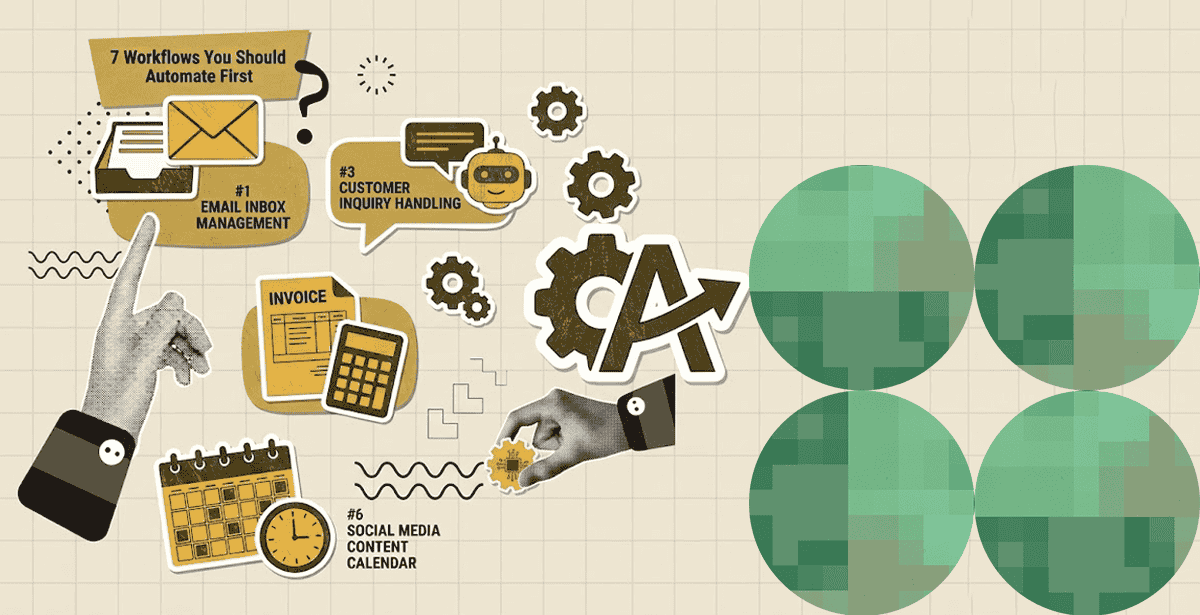
After consulting our AI engineering team, here are the seven workflows that consistently deliver the fastest, most measurable returns from AI automation services.
Why Workflow Selection Drives ROI From AI Automation Services
Not every process is worth automating first. The best candidates share three traits: high volume, repeatable structure, and a clear cost of delay.
McKinsey also found that AI “high performers” are nearly three times more likely to have redesigned their workflows around AI. They don’t just bolt automation onto an unchanged process.
That distinction matters more than the model you choose. It’s the difference between real workflow automation and a pilot that never scales.
What Makes a Workflow Ready for Intelligent Automation
Not every candidate is created equal. A workflow is ready for intelligent automation when three conditions line up at once.
First, it happens often enough that small time savings compound into real hours. Second, the inputs follow a predictable pattern, even if the raw data is messy. Third, delaying automation has a visible cost. That might be a missed SLA, a compliance risk, or a customer who churns while waiting.
If a process only meets one of these criteria, it’s worth watching. If it meets all three, it belongs at the top of your automation roadmap.
1) Document Classification and Data Extraction With Robotic Process Automation AI
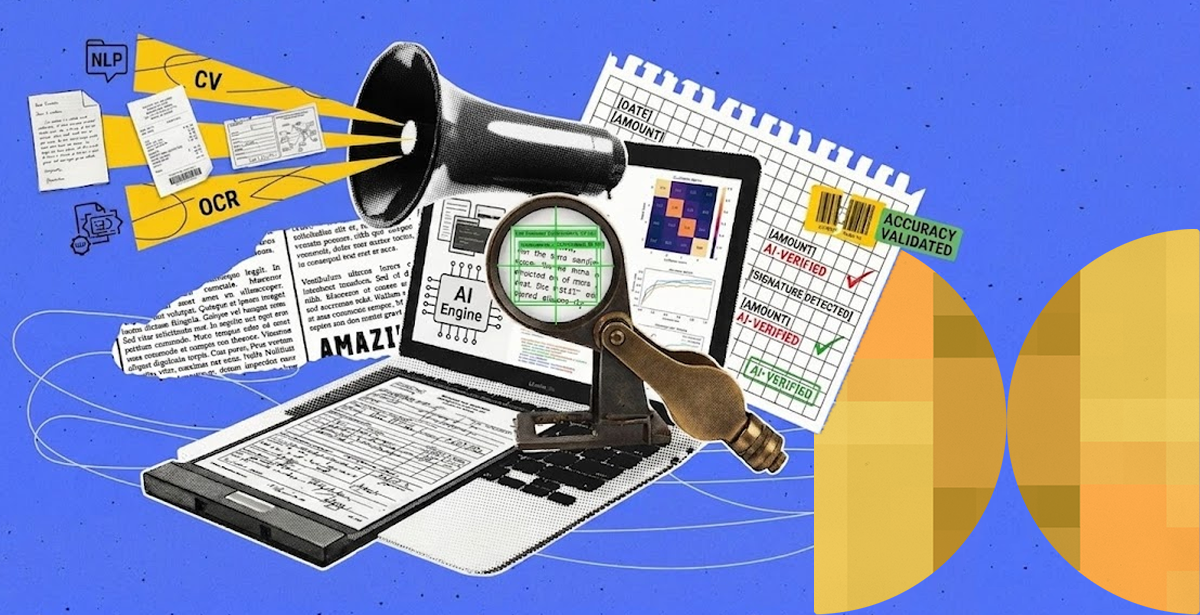
Unstructured documents, like invoices, PDFs, and scanned forms, are usually the first workflow worth automating. They’re high-volume, rules-based, and painfully manual today.
DPL built exactly this for National Janitorial Solutions, a facility management company handling 18,000 US locations. The system combines Google Document AI with GPT-3.5 Turbo.
It now classifies over 50,000 work orders a day and pulls PO and invoice numbers automatically. The result: 400 hours of manual labor saved every week.
💡 Start with documents that cost you time. Document image analysis is most valuable when applied to high-volume, repetitive workflows such as invoices, purchase orders, scanned forms, and work orders. Before automating, identify document types that consume the most manual effort and have consistent extraction requirements. These make strong candidates for measurable intelligent document processing gains.
Where Human Review Still Fits
Robotic process automation AI handles the repetitive extraction and routing. People still review exceptions, like a smudged invoice or an unfamiliar vendor format. That split is what keeps accuracy high without slowing the whole pipeline down.
2) Complaint, Case, and Ticket Triage With AI-Powered Automation
Any workflow where incoming requests need to be read, classified, and routed is a strong automation candidate. Speed and accuracy both matter here.
DPL’s platform for Pakistan’s Sindh Ombudsman uses generative AI on Amazon Bedrock. It classifies complaints by department and severity, flags urgent cases through sentiment analysis, and surfaces similar past cases.
The AI-powered complaint management platform cut resolution time by 65%. It also hit 92% classification accuracy while processing over 1,000 complaints daily.
Why Sentiment Signals Matter in Triage
Not every case is equally urgent. AI-powered automation can read tone and language in a complaint. It flags a frustrated or high-risk case before a human ever opens the ticket. That single signal often determines whether a case gets escalated in minutes or sits in a queue for days.
3) Customer Support and Conversational AI
Repetitive customer questions drain support teams. They also frustrate customers who want instant answers. Conversational AI closes that gap around the clock.
DPL’s Michael AI Bot was built for the wellness platform Pause. Breathe. Reflect. It reads how a user is feeling in real time. Then it recommends the right guided session from a library of 2,000-plus sessions.
This shows why AI chatbot development services work best when tied to a specific trigger, not a generic FAQ bot.
When to Escalate to a Human Agent
Good conversational AI knows its limits. Emotional edge cases, billing disputes, and anything involving legal or medical risk should route straight to a person. Automating the easy 80% of conversations is what makes that human attention possible for the hard 20%.
4) Predictive Maintenance and Equipment Monitoring Through AI Process Automation
If your team only learns equipment is failing after a complaint or breakdown, you’re paying for reactive maintenance. This is where AI workflow automation flips the model from reactive to predictive.
For iApartments, a smart-building platform spanning 30,000-plus US units, DPL built a forecasting model. It analyzed 13-plus months of HVAC sensor data to flag anomalous runtime cycles before failure.
The broader platform now sees a 60% reduction in mean time to resolution. These predictive maintenance workflows turn maintenance from a cost center into a competitive advantage.
From Reactive to Predictive Maintenance
AI process automation doesn’t just flag a problem. It ranks units by risk, so property managers know which ones need a technician this week versus next quarter. That prioritization is what turns raw sensor data into a usable maintenance schedule.
5) Content and Data Quality Verification
Some workflows are less about speed and more about accuracy at scale. Verifying that digitized content matches an authoritative source is one of them.
DPL’s work digitizing the Quran combined computer vision and NLP. The system extracts text from images, normalizes diacritics, and cross-checks it against an authenticated database. It reached 99% precision.
The same pattern applies anywhere data integrity is non-negotiable, from regulatory filings to medical records. Frameworks like the NIST AI Risk Management Framework increasingly guide exactly this kind of verification workflow.
Compliance and Audit Trails
Verification workflows need more than accuracy. They need a record of what was checked, when, and against which source. Pairing this automation with the right monitoring keeps that audit trail intact as models change over time. DPL’s MLOps services cover exactly that kind of ongoing oversight.
6) Sentiment Analysis and Customer Feedback Loops
Manually reading through reviews, surveys, and tickets to spot dissatisfaction doesn’t scale past a few hundred responses a month.
Automated sentiment analysis services process feedback continuously and flag negative trends before they show up in churn numbers.
This uses the same NLP approach DPL applied to flag urgent complaints for the Sindh Ombudsman. It gives product and support teams an early warning system instead of a quarterly report.
Turning Feedback into Product Decisions
Sentiment scores are only useful if someone acts on them. The best implementations route negative trends straight to the team that owns the fix. That might be product, support, or operations, not a monthly dashboard nobody reads.
7) Financial Reporting, Risk, and Compliance Workflows Powered by AI Workflow Automation
This is business process automation at its most valuable. Finance teams still spend hours reconciling reports, checking figures against source documents, and formatting compliance filings.
Agentic AI is starting to absorb that work. Gartner predicts 40% of enterprise applications will feature task-specific AI agents by the end of 2026. That’s up from less than 5% in 2025.
DPL’s generative AI and RAG solutions apply that same agentic approach to finance. They pull from source documents, check figures automatically, and draft first-pass reports for human review.
Where Humans Stay in the Loop
AI workflow automation drafts the first pass. A finance lead still signs off before anything goes to a regulator or a board. That checkpoint is non-negotiable, and it’s exactly what makes this workflow safe to automate.
How Do You Pick Which Workflow to Automate First?
Start with the workflow that has the highest volume, the most repeatable structure, and the clearest cost of doing nothing. A process run 500 times a week beats one run 5 times, even if the second one feels more urgent.
That simple test cuts through most of the internal debate about where to begin.
Does AI automation replace the team running the workflow? Rarely. DPL’s systems handle classification, extraction, and routing. People still review edge cases and make the final call on anything ambiguous.
What to Look for in an AI Automation Services Partner
Not every AI vendor can execute past the demo stage. When you’re evaluating AI automation services, look for a partner who has shipped in a regulated or high-volume environment. A lab prototype doesn’t count.
DPL holds ISO 27001 and ISO 27701 certification. It was recognized by Gartner for application development services. It was also named to Newsweek’s 2025 Global Top 100 Most Loved Workplaces, the only company from South Asia on that list.
Those credentials matter less on their own. What matters is that they show up alongside case studies with real, cited numbers: 65% faster complaint resolution, 400 hours saved weekly, and 60% lower mean time to resolution.
A good AI automation services partner will tell you where a workflow needs more human oversight. They won’t just show you where the model performs well. That honesty is often the clearest signal of a team that has actually run these systems in production.
Start With One Workflow, Not a Transformation
You don’t need an enterprise-wide AI strategy to get real results from AI automation services. You need one high-volume workflow, a clear success metric, and a partner who’s automated similar processes before.
DPL has done this across government, healthcare, fintech, and facility management. The pattern holds: pick the highest-leverage workflow first, prove the ROI, then expand.
If you’re not sure which workflow fits that description, start small. A short AI proof of concept is the fastest way to find out.