IoT and Embedded Development

How to Choose an IoT Cloud Platform for Millions of Connected Devices
Read more

GPS fails the moment workers step indoors. Bluetooth beacons drain budgets and patience. DPL's Smart Workforce Tracking is a Wi-Fi-based indoor positioning system that delivers real-time visibility into your workforce with up to 1-meter accuracy.

A working proof of concept, built for one of the largest janitorial services companies in the United States. Ready to scale.

You know the work needs to happen. You know where it needs to happen. What you don't know and what your clients increasingly want proof of - is whether it actually happened, by whom, and when.
Most companies reach for GPS first. It's the intuitive answer. It doesn't work. GPS signals can't penetrate building structures reliably. An indoor workforce monitoring system built on GPS is one that fails every time a worker walks through a front door.
Bluetooth beacons are the next instinct. And they come with a different set of problems: every building needs new beacon hardware installed before you can see anything. Batteries drain fast, creating constant maintenance cycles. Deploying beacons in commercial properties often requires permits, adding delays and costs before a single worker is tracked.
The result is a widespread gap: facility managers operating across multiple sites with no reliable, scalable way to verify where workers are, whether tasks were completed, or how time was actually spent inside buildings.
DPL's Smart Workforce Tracking is built on a different premise: your buildings already have Wi-Fi. That infrastructure can do more than serve laptops and phones — it can power a real-time indoor location tracking system for your entire field workforce.
No new access points. No beacon deployments. No property permits. The same Wi-Fi network your clients already run becomes the positioning backbone for your workforce monitoring system.
The only hardware your workers need is the DPL Smart Wristband — a purpose-built device worn on the wrist that communicates continuously with surrounding access points. The system uses those signal interactions to triangulate each worker's position in real time, feeding live data to a central dashboard that managers can access from anywhere.
It's not a workaround. It's a fundamentally more practical architecture for the realities of multi-site, indoor workforce management.

From sensor to action in six connected steps. Here’s how DPL’s IoT waste management platform closes the loop between physical infrastructure and operational decision-making

Live floor plan views showing every worker's current position, updated continuously. No manual check-ins, no radio calls to verify locations automatic, always-on indoor worker location tracking that works as long as Wi-Fi is present.

Movement patterns and time-in-zone data visualized as heat maps overlaid on your floor plans. See at a glance which areas received coverage, which were missed, and where workers spend the most time. Heat maps turn raw location data into accountability you can show clients.

Define geographic boundaries around buildings, campuses, or specific zones. The system triggers automated alerts when workers enter or exit defined areas — useful for arrival verification, safety compliance, and site attendance management.

Location-based check-in and check-out replace manual timesheets. The system logs exact arrival and departure times at each site automatically, creating a verified, tamper-resistant attendance record tied to physical presence — not a button press.

Assign tasks and checklists to specific zones, rooms, or floors. Workers see their assigned tasks on the wristband display; managers see real-time completion status in the dashboard. Service delivery becomes verifiable, not assumed.

Using multiple access points for triangulation, the system achieves indoor positioning accuracy up to 1 meter. That's the difference between knowing a worker is in the building versus knowing they're in Room 204 on Floor 2 — which is the difference between operational awareness and operational control.
The dashboard supports multi-floor navigation and multi-site management. Whether you're managing a single building or hundreds of locations, the same workforce monitoring system is architected to scale with your operation.
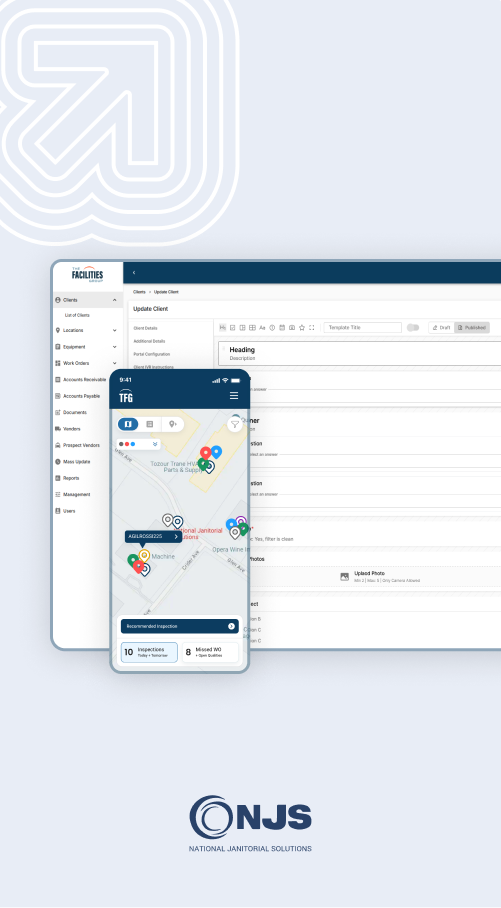
National Janitorial Solutions needed proof that Wi-Fi-based indoor positioning could replace GPS and manual check-ins across a nationwide operation spanning 18,000+ sites in all 50 states. DPL built a Smart Wristband proof of concept using NJS’s existing Wi-Fi infrastructure — no new access points, beacons, or permits required.
Client sites across the US
U.S. states covered
Accuracy achieved in the pilot
Workers across NJS's nationwide operation
New access points, beacons, or permits required
DPL is not a software company that added IoT to a services catalogue. We are an embedded systems and IoT engineering firm - firmware, hardware interfaces, cloud architecture, and field deployment are the core of what we do. Smart Workforce Tracking wasn't assembled from off-the-shelf components and third-party SDKs. It was engineered.


The NJS engagement wasn't a lab demo. It was a working proof of concept deployed in real facility management environments, with real workers, tested against the operational realities of a nationwide janitorial services company. The architecture is proven. The scale-up path is clear.


Every design decision in Smart Workforce Tracking was made to minimize deployment friction. Using existing Wi-Fi infrastructure isn't a compromise — it's the architecture. Your facilities already have the backbone in place. We built around what's real, not what's ideal in a spec document.


From the wristband firmware to the cloud dashboard, DPL owns the complete stack. There is no third-party positioning engine, no white-labeled device hardware with unknown firmware. The entire system — device, triangulation logic, data pipeline, and interface — is engineered in-house. When something needs to change for your deployment, we can change it.


The platform runs on AWS IoT Core, with enterprise-grade security throughout: X.509 certificate-based device authentication, TLS 1.3 encryption, AWS WAF, and AWS GuardDuty monitoring. This is the same architecture DPL uses to manage 200,000+ connected devices for its smart communities clients. .


DPL has been recognized by Newsweek as a 2025 Global Top 100 Most Loved Workplace, acknowledged by Gartner for application development services, and has delivered project work recognized by the US Department of Defense.
Smart Workforce Tracking is the right indoor location tracking system for any organization deploying field workers inside large, multi-site, or complex indoor environments:

Prove service delivery, eliminate timesheet disputes, and give enterprise clients the documented, location-verified proof of work they're asking for. The NJS proof of concept validates this solution in the exact environment where it matters most.
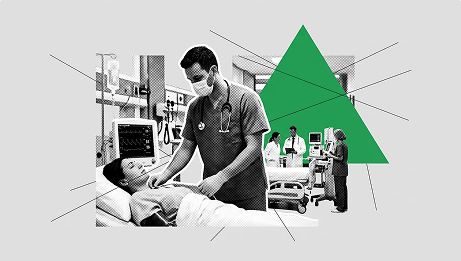
Track staff positioning across wards, floors, and departments for compliance, safety response, and operational efficiency. Know where your team is when response time matters.
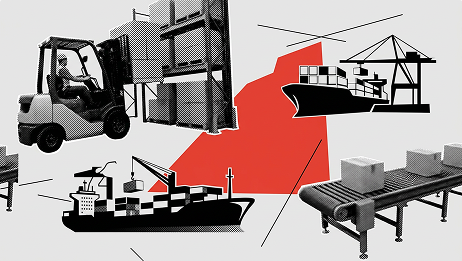
Monitor picker and operator movement across warehouse floors to optimize routing, reduce wasted motion, and verify zone coverage without adding supervisory headcount.

Give facilities and operations teams real-time visibility into maintenance staff, security personnel, and service crews across multi-building environments.

Integrate indoor workforce monitoring into smart building operations, tying worker activity data to space utilization, service delivery verification, and tenant reporting.
DPL's proof of concept for National Janitorial Solutions validated that Wi-Fi-based indoor positioning works in real-world facility management environments - accurate, practical, and infrastructure-light. If you're managing a distributed indoor workforce and need to move beyond manual check-ins and GPS dead zones, this is the conversation to have now.
Talk to DPL's IoT team. We'll walk you through the system, assess your Wi-Fi infrastructure, and map out exactly what a deployment looks like for your specific environment — before you commit to anything.