
Smart Home IoT Explained – Building a Truly Connected Living Space

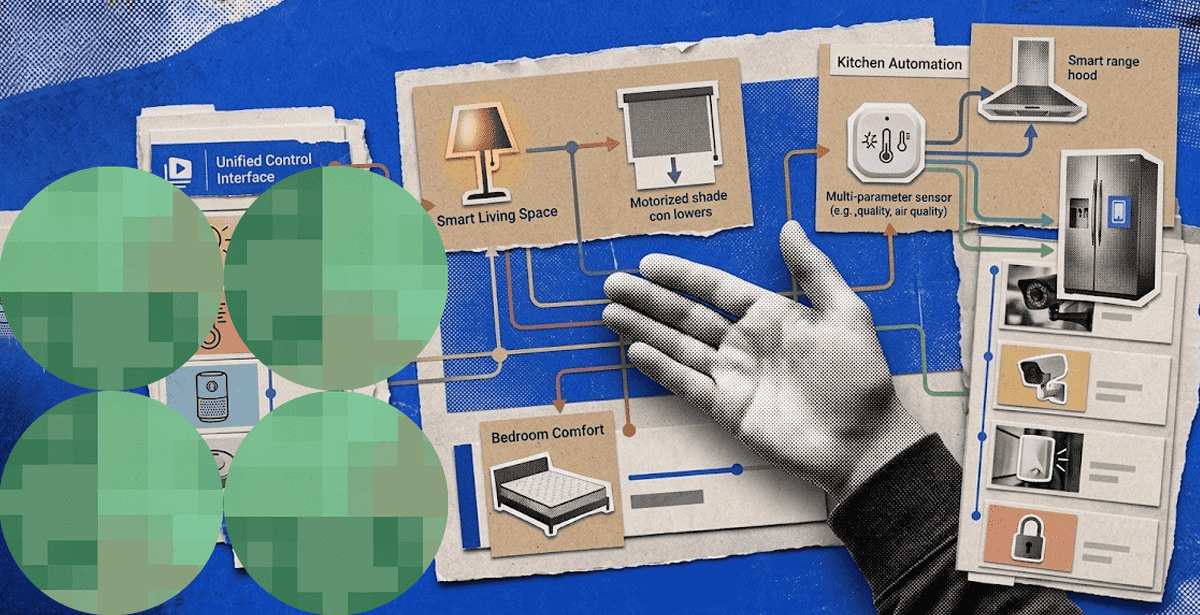
Ask most people what a smart home is, and they’ll describe a voice assistant that turns off the lights. That description undersells what’s actually possible today.
Smart home IoT has moved well past isolated gadgets responding to voice commands. A truly connected living space coordinates dozens of devices as one coherent system, not a pile of separate apps.
Understanding the gap between a marketing pitch and the engineering reality will help you understand why some smart home deployments succeed and others quietly stall out.
Smart Home Solutions: Beyond the Single-Device Gadget
Smart home solutions built around individual gadgets rarely add up to a coherent living space. A smart bulb here and a smart lock there don’t automatically talk to each other.
Real coordination requires a shared platform underneath every device, not just a shared app icon on a phone’s home screen. That platform is where most of the actual engineering work lives.
Device discovery, state synchronization, and conflict resolution all happen behind the scenes, ideally unnoticed. Good smart home IoT is invisible engineering by design, not by accident.
Vendors selling individual gadgets rarely mention this platform requirement, since it isn’t their problem to solve. It becomes the homeowner’s problem the moment two devices from different brands need to work together reliably.
That quiet handoff of responsibility, from manufacturer to homeowner, is rarely discussed openly. Most buyers only discover it once something stops working correctly between two devices.
Warranty terms rarely cover this kind of cross-device failure either. The homeowner ends up troubleshooting a problem no single vendor takes responsibility for. That gap is a real, underappreciated cost of ownership.
The global smart home market reached $164.13 billion in 2026, growing at a 13.65 percent compound annual rate toward 2031. Much of that growth traces back to interoperability improvements happening industry-wide.
That interoperability push has been years in the making. It’s still far from fully resolved across every device category available today. Older devices, in particular, remain locked into their original vendor’s ecosystem.
Buyers rarely see this fragmentation until after a purchase is already made. A product listing almost never mentions which hub or standard a given device actually depends on. That omission shifts real research burden onto the homeowner before checkout.
Retailers could solve much of this confusion with a simple, standardized interoperability label at the point of sale. That kind of labeling exists in other product categories already, from energy efficiency to nutrition. Until it becomes common practice here too, due diligence before buying remains the homeowner’s responsibility alone.
Matter, the newer interoperability standard, has meaningfully reduced the walled-garden problem that plagued smart home solutions for years. Devices from different manufacturers can now speak a common protocol more reliably than before.
That interoperability doesn’t eliminate the need for good system design underneath it, though. A well-designed platform still has to reconcile timing, conflicting commands, and device failures gracefully behind the scenes.
💡 Think ecosystem before individual devices. Smart home technology works best when devices share compatible protocols, platforms, and data models that allow them to coordinate reliably. Before adding another device, check its interoperability requirements, supported standards, and hub dependencies to avoid building a collection of disconnected gadgets that becomes harder to manage over time.
Smart Apartment: Coordinating Devices at Building Scale
A smart apartment introduces a coordination challenge that a single-family smart home never has to solve. Devices belong to residents, but shared infrastructure belongs to the property itself.
That split creates real design questions worth resolving early in any deployment. Who controls the thermostat schedule when a resident’s preference conflicts with a building-wide energy management policy?
There’s rarely a universally correct answer to that question. That’s exactly why it needs a deliberate decision, not a default setting left unexamined. Property managers and residents need a clear, documented boundary.
Multi-tenant systems also need to survive a resident moving out without breaking anything for the next occupant. Device pairings, saved schedules, and access credentials all need to reset cleanly between tenants.
Access control adds another layer of complexity specific to multi-unit buildings. A smart lock system has to handle move-ins, move-outs, and temporary guest access without ever compromising a resident’s security.
💡 Building-scale deployments need a clear architecture for how devices, property systems, and cloud services interact. Smart building technology should separate resident-level controls from shared building infrastructure while maintaining consistent device management, access policies, and data flows across properties. Designing these boundaries early makes it easier to scale deployments without creating conflicts between residents, property managers, and building-wide systems.
Case Study: 552,000 Manhours Saved Across a Smart Communities Portfolio
Proptech unicorn, iApartments, needed a unified IoT platform for smart apartments spanning locks, lights, thermostats, and sensors. Fragmented, single-vendor systems couldn’t scale across a fast-growing multifamily portfolio.
DPL built an AWS IoT Core platform now managing more than 200,000 connected devices across residential properties. The system had to reconcile resident preferences with property-wide energy and security policies simultaneously.
The results reflect what disciplined smart home IoT architecture delivers at real portfolio scale. The platform now saves an estimated 552,000 manhours annually across managed properties.
More than 2 million data points flow from over 30,000 connected apartments today, with 80,000-plus apartments targeted by 2027.
Read the full iApartments case study for more details.
IoT Devices: The Hardware Layer That Everything Else Depends On
IoT devices are where smart home ambitions meet physical, real-world constraints. Battery life, wireless range, and manufacturing cost all shape what’s actually achievable in a given deployment.
A device that looks impressive on a spec sheet can fail badly once installed in a real apartment. Real walls and real interference rarely match the clean conditions of a manufacturer’s test lab.
Certification testing helps, but it can’t fully replicate the specific interference profile of any given building. Concrete walls, metal studs, and neighboring WiFi networks each degrade signal differently in practice.
Field testing in a representative sample of actual units, before a full rollout, catches most of these surprises early. Skipping that step to save time on a pilot tends to cost far more later at scale.
Security deserves particular attention at this hardware layer, since a compromised device threatens the entire connected home around it. IoT security should therefore be built into the device from the start, covering authentication, secure communication, firmware updates, and access controls.
A single weak device on a shared network can become an entry point for an attacker. Network segmentation limits that blast radius considerably when a device does eventually get compromised.
Isolating IoT devices onto their own network segment is a simple step most consumer setups still skip. It costs little and closes off a meaningful attack surface for very little effort.
Most modern routers now support this kind of guest or IoT-specific network out of the box. The real barrier is awareness, not cost. Few homeowners realize the option even exists on their own router.
Firmware update capability is non-negotiable for any device deployed at real scale in the field. A device that can’t receive security patches remotely becomes a growing liability the longer it stays in service.
Device lifecycle planning matters just as much as the initial hardware selection decision. A five-year-old smart lock still needs support, spare parts, and firmware updates long after the original purchase.
Smart Home Automation: Making Devices Act, Not Just Report
Smart home automation is where connected devices stop merely reporting status and start actually taking coordinated action. That shift from passive monitoring to active response is where real value gets created.
Rule-based automation, if this happens then do that, covers a large share of practical use cases. It rarely needs anything more sophisticated to deliver most of the value a resident actually wants.
Simplicity here is usually a feature worth defending, not a limitation worth apologizing for in a product pitch. The most reliable automations tend to be the least clever ones, by a wide margin.
More advanced automation layers in predictive behavior on top of simple rules, anticipating needs before a resident acts directly. That prediction requires meaningfully more data and modeling than a basic rule engine ever needed.
Overreach is the real risk at this more advanced layer. A system that tries to predict too much gets it wrong often enough to annoy the resident. Conservative defaults tend to age better than aggressive ones.
Reliability matters more here than almost anywhere else in a smart home system. Automation that occasionally fails to lock a door erodes trust faster than automation that’s simply less clever than advertised.
IoT Connectivity: The Layer Nobody Sees Until It Breaks
IoT connectivity choices are invisible when everything works and impossible to ignore the moment they don’t. WiFi, Bluetooth, Zigbee, Z-Wave, and cellular each serve a genuinely different purpose.
According to IoT Analytics, more than 21.1 billion IoT devices were connected globally in 2025, growing 14 percent year over year. Wi-Fi alone now accounts for roughly a third of all IoT connections worldwide today.
That Wi-Fi dominance makes sense for bandwidth-hungry devices like cameras. It’s a poor fit for a battery-powered sensor that needs to last years on one charge. Different devices genuinely need different protocols.
Choosing a single protocol for every device in a home is a common early mistake worth avoiding from the start. The right architecture usually blends two or three protocols, each matched to a specific device category.
A well-designed gateway hides that underlying protocol diversity from the resident entirely. It presents one unified interface regardless of what’s happening underneath. That abstraction is where real engineering value sits.
Getting that abstraction layer right takes real protocol expertise, not just a generic integration checklist. Teams that skip this step usually end up bolting protocols together after launch. Designing for that diversity from day one avoids the retrofit entirely.
Our guide to what LoRaWAN is and when to use it covers an option built for range and battery life. Not every smart home device needs WiFi’s speed or its power draw.
Mesh networking has become the default architecture for larger homes and apartment buildings specifically. It extends coverage well past what a single access point can reliably reach on its own.
Self-healing mesh topologies route around a failed node automatically, without requiring a manual reconfiguration from a technician. That resilience matters considerably more in a building with dozens of units than in a single house.
Redundancy in connectivity is worth designing for deliberately, not just hoping for the best during an outage. A smart lock that fails open, or fails permanently locked, during a WiFi outage is a genuine safety concern.
Building a Truly Connected Living Space
Smart home IoT delivers on its promise only when the underlying platform gets real engineering attention. Not any single flashy device. That platform work is unglamorous and absolutely essential to getting this right.
DPL’s IoT development practice has built smart home IoT platforms managing hundreds of thousands of devices. That scale exposes coordination problems a single smart-home pilot never encounters at all.
Getting the platform right the first time avoids a costly rebuild once a deployment scales past a handful of buildings. Smart home IoT rewards architecture discipline over device novelty, every single time.
So, let our team know how we can help you with your next smart home venture. Use the form below to contact us and we’ll get back to you ASAP.