Real Talk: How Long Does It Take to Make an App?


“How long does it take to make an app?”
This is one of the first questions founders and business leaders we get before starting development.
But while some will quote numbers that suit their sales goals, the accurate answer is: it depends. A simple app can take just a few months, while a complex, feature-rich platform may require a year or more to build properly.
You see, app development isn’t just about writing code. It entails many stages and tasks that add time. And each decision you make about features, platforms, and user experience directly impacts your timeline.
If you’re seeking a comprehensive, realistic timeframe, this guide has all the answers you need.
How Long Does it Take to Develop an App?
The short answer is anywhere from two months to over a year. However, you didn’t come here for a one-liner, did you? So, let’s go over the different aspects that determine your project’s timeline.
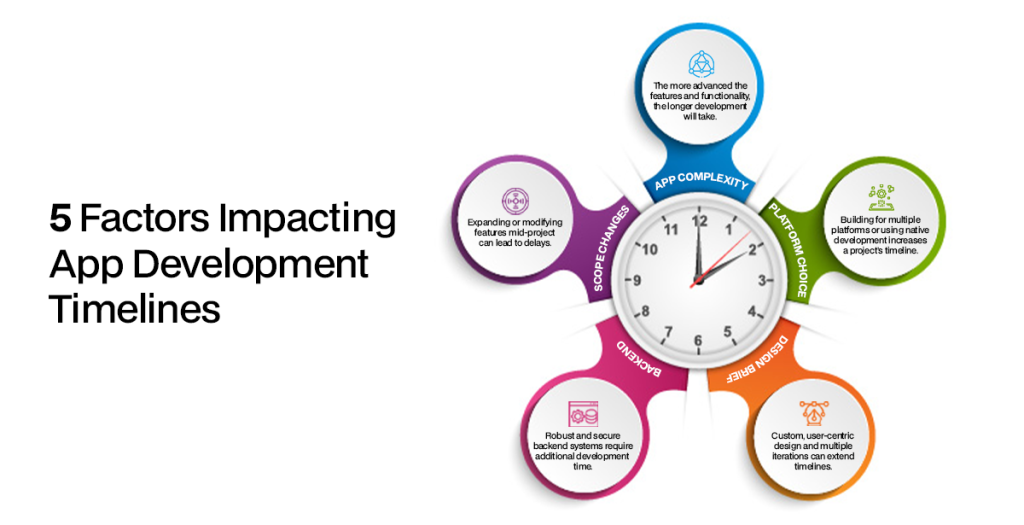
App Complexity
While every app is different, most projects fall into one of four general categories:
- Simple apps
- Medium complexity apps
- Complex apps
- Enterprise-grade or highly customized apps
Simple apps focus on a limited set of core features. They typically include user registration/login, static content, and minimal backend logic. Examples include a basic fitness tracker, a simple event app, or a productivity checklist app.
Because the feature set is narrow and integrations are minimal, development moves faster. However, even simple apps require proper planning, design, and testing. That’s why they still take at least a couple of months to complete.
Next comes medium complexity apps. These introduce more advanced functionality and integrations like payment gateways, push notifications, and third-party API integrations.
Examples might include an e-commerce app or a social networking app with standard features. Since these apps’ backend architecture becomes more sophisticated, testing cycles increase, and the number of user flows expands. So, expect to spend up to 8 months developing such apps.
The third type of apps is complex apps, i.e. feature-rich platforms that require robust infrastructure. They may involve features such as AI or machine learning integration, real-time syncing, and large-scale data processing.
If you’re wondering how long does it take to make an app of this kind, expect to spend at least nine months. That’s cause these apps require extensive architecture planning, multiple testing cycles, scalability considerations, and often parallel development teams.
Finally, enterprise apps are built for scale, compliance, and long-term performance. They often involve multi-region deployments, advanced security protocols, and complex dashboards.
These projects demand deep discovery phases, heavy customization, and multiple stakeholder approvals. That’s why development may continue in structured phases even after the initial release. So, be prepared to invest over 12 months while working on such apps.
Platform Choice
Building a native app for iOS or Android separately typically takes longer because each platform requires its own codebase, testing process, and optimization.
If you decide to launch on both platforms simultaneously, timelines can nearly double. That is unless you use a cross-platform framework like Flutter or React Native.
That said, cross-platform development may require extra customization if your app relies on highly platform-specific features. Moreover, web apps, progressive web apps (PWAs), and hybrid solutions require different development cycles and technical trade-offs.
💡 You should definitely explore the option of cross platform apps. Cross platform mobile app development services are highly in demand considering businesses today want faster time-to-market, reduced development costs, and the ability to reach both iOS and Android users simultaneously. Plus, instead of building and maintaining two separate codebases, cross-platform frameworks allow developers to write much of the code once and deploy it across multiple platforms. For startups and growing businesses especially, cross-platform development offers a practical balance between performance, scalability, and budget efficiency. That too without significantly compromising user experience.
Finally, beyond coding, platform-specific compliance requirements such as Apple App Store guidelines can introduce review delays. So, make sure to discuss this with your development team to estimate how long does it take to make an app.
Design Requirements
Design is often underestimated when calculating app development timelines. While a basic, template-driven interface can be implemented relatively quickly, custom UI/UX design adds several weeks to the process.
You see, you need to factor in wireframing, prototyping, user journey mapping, usability testing, and iteration. If you’re building a customer-facing app in a competitive market, you need more time to refine and validate its design.
Fancier specs such as animations, interactive elements, and micro-interactions further extend the timeline. In addition, stakeholder feedback loops can slow progress if multiple rounds of revisions are required.
So, the more polished and customized your design vision, the more time your team will need to execute it effectively.
Backend Infrastructure
Backend infrastructure is what powers your app behind the scenes. It’s what manages data storage, authentication, business logic, and integrations.
The more complex your app’s functionality, the more sophisticated the backend architecture needs to be. Whereas simple apps may rely on basic databases and limited server logic, complex applications require scalable cloud infrastructure, API development, real-time data processing, and advanced security protocols.
Security and compliance requirements can significantly extend development time due to encryption, audits, and regulatory standards. This is especially true for industries like finance or healthcare where organizations have to comply or die.
So, when inquiring about how long does it take to make an app, remember to properly plan aspects related to the backend. Otherwise, you’ll face performance issues that can force you into expensive rework.
Scope Changes
Scope changes are one of the biggest reasons app development timelines expand.
What starts as a clear idea can quickly grow as new features, integrations, and improvements are added mid-project. Named “feature creep”, this phenomenon can dramatically slow progress.
Even seemingly small additions may require changes across multiple parts of the system. And when stakeholders frequently revise requirements or pivot strategy, teams must rework existing components.
Thankfully, working with an Agile software development company can be beneficial in this regard. Such organizations manage evolving ideas by breaking work into sprints. Just remember to ensure they’re disciplined to protect the core timeline.
The most efficient projects define a clear Minimum Viable Product (MVP) early and delay non-essential features for future updates. This ensures steady progress and prevents pushing a six-month project into a year-long endeavor.
App Development Tips to Balance Speed and Quality
So, now that you have your answer for ‘how long does it take to make an app?’, you’re probably curious about what you can do to cut down an estimated duration.
After all, being late to market can severely impact your app’s profitability and exceed the costs of overspending on development.
So, here are some tips from the experts to get you started.
Choose the Right Tech Stack from the Start
Selecting the right technology stack at the beginning of your project is one of the most critical decisions you’ll make.
The frameworks, programming languages, databases, and infrastructure you choose will directly affect performance, scalability, security, and long-term maintenance.
A poorly chosen stack can lead to compatibility issues, limited flexibility, or the need for a complete rebuild as your app grows.
So, while it may be tempting to choose trendy or cheaper technologies, it’s smarter to align your stack with your product goals, expected user load, and future expansion plans.
Prioritize UX Clarity Over Visual Complexity
A visually impressive app may grab attention, but usability is what keeps users engaged.
Overcomplicated interfaces, excessive animations, and design-heavy features can slow development and introduce unnecessary bugs.
On the other hand, prioritizing clear navigation, intuitive flows, and user-friendly layouts ensures your app delivers value without confusion.
And, honestly, you won’t be constantly asking about how long does it take to make an app if you choose simple, functional design. This choice cuts down development time because it requires fewer revisions and technical adjustments.
When UX clarity leads the design process, teams spend less time fixing usability issues after launch.
💡 You may want to understand what goes into the design phase before working on your next app. Check out our comprehensive guide on what goes in the software development life cycle design phase. A clear understanding of this stage helps you make smarter decisions, reduce costly revisions, and set a strong foundation for development.
Automate Testing Where Possible to Speed Up QA
Manual testing alone can significantly slow down development, especially as features grow. Alternatively, automated testing allows teams to quickly validate core functionalities, detect bugs early, and ensure stability with every new update.
There are many tools for performing unit tests, integration tests, and regression testing that help maintain quality without requiring repeated manual effort. What further makes them great is that they reduce human error and speed up release cycles.
While setting up automated testing requires initial investment, it saves substantial time over the life of the project. And by embedding automation into your workflow, you maintain reliability while keeping development agile and efficient.
Maintain Tight Communication Between Stakeholders and Developers
You need clear and consistent communication to keep your project on schedule. Without this connection, you won’t be able to frequently ask, “How long does it take to make an app?”
Jokes aside, misaligned expectations, vague instructions, or delayed feedback can result in rework and timeline extensions. Regular check-ins, sprint reviews, and transparent progress updates ensure everyone stays aligned on priorities and goals.
Using collaborative tools and documented discussions also help prevent confusion. Strong communication further builds trust, reduces friction, and accelerates decision-making.
Document Requirements Thoroughly to Minimize Ambiguity
Detailed documentation provides a shared reference point for features, user flows, technical specifications, and acceptance criteria. When expectations are clearly outlined, developers can work confidently without guessing or making assumptions.
Proper documentation also makes onboarding new team members easier and ensures continuity throughout the project lifecycle. This is especially important considering the global technology sector consistently experiences higher turnover rates between 20-25%.
Additionally, documentation helps control scope creep by clearly defining what’s included in the current phase and what can be deferred. Though you may experience slow initial planning at first, you’ll be able to avoid costly revisions later.
Conduct Early User Testing to Catch Usability Issues Early
By testing wireframes or prototypes with real users, you can identify confusion points, friction in user flows, and unmet needs.
And fixing usability issues during the design phase is significantly faster and cheaper than making structural changes after development begins.
Early validation also ensures that you’re building features users actually value. This feedback-driven approach reduces the risk of launching a product that misses the mark.
Allocate Buffer Time for Revisions and Unexpected Challenges
No matter how well you plan, unexpected technical issues, integration challenges, or feedback revisions will rear their ugly heads.
So, rather than asking your team constantly about how long does it take to make an app, be proactive. Include buffer time into your development schedule. That way, you can create flexibility without compromising deadlines.
Buffer time also allows space for innovation and refinement rather than reactive problem-solving.
Besides, rushed timelines often lead to shortcuts, overlooked bugs, and lower quality outcomes. By anticipating delays, you reduce stress on the team and maintain performance standards.
So, embrace uncertainty as part of the development process. And include contingency time to ensure smoother delivery while preserving both speed and product integrity.
Focus on Long-term Maintainability
Launching quickly is important, but sustainable success depends on maintainability.
That’s why writing clean, well-documented code and following best practices are important steps to take. Yes, they need slightly longer upfront, but they’ll simplify updates, bug fixes, and feature additions later.
Poorly structured code can create technical debt that slows future development and increases maintenance costs. On the other hand, designing with modular architecture and scalability in mind ensures your app can evolve without major rewrites.
Prioritizing maintainability further helps your team respond quickly to market changes after launch. This agility allows your product to adapt to evolving user needs, competitor innovations, or regulatory changes without requiring a complete overhaul.
Plan For Scalability from Day One
Rather than wondering about the present with questions like ‘how long does it take to make an app?’, you may want to consider its long-term potential and future growth.
Scalability ensures your app can handle increased users, data, and functionality without performance issues. If scalability isn’t considered early, rapid growth can cause crashes, slow loading times, and infrastructure failures.
Designing scalable architecture involves choosing cloud-based solutions, optimizing databases, and building flexible APIs. While this may add initial complexity, it prevents major disruptions as your user base expands.
Scalable systems also allow smoother integration of new features and services. Therefore, you’ll get to protect your investment and ensure your app’s ability to adapt to evolving business demands without costly restructuring.
Ready to Embark on Your Custom App Development Journey?
DPL has worked with startups and enterprises alike to bring their visions into reality. We’ve even helped some exit the market with multi-millions in profit eventually. And we have the testimonial to prove it.
So, why not contact us for your next project? Rest assured that our team has the skill and expertise to handle any challenges you have, and even the knowledge to answer any tough questions you have in mind. Including ‘how long does it take to make an app?’ of course.
Simply connect with us via the form below and let us collaborate on something great.